Saturday, February 23, 2013

Frankenstein. (1910) J. Searle Dawley

Monster from a Vat for A Black and White February.

This is a DVD I've had laying around for a few years, but I only took a look at it last night. It's a sixteen-minute silent from 1910, produced by Thomas Edison's very own Edison Studios. It's history's first Frankenstein film, created twenty-one year's in front of James Whale's masterpiece, which I've written about earlier here.

Of notable interest are the creation of the misshapen monster (in a prolonged early scene the monster rises from some kind of vat, a reddish tint being added to this section of the movie), and its unique ending (the monster somehow escaping into a mirror to protect his creator's love). There is inherent symbolism indicating that the monster is a part of Dr. Frankenstein's evil nature (history's first Tyler Durden), but whether it is psychological or an actual physical manifestation is hard to say.

This is scratchy, grainy, jumpy, early film at its silent finest. Its take on the monster is quite different from Whale's adaptation, and any Frankenstein monster we've seen since.

Wednesday, February 20, 2013

The Phantom of the Opera. (1925) Rupert Julian

Lon Chaney desperately seeks dentist for 
A Black and White February.

Here we have a "Princess and Toad" story, but no magic kiss and no chance at a Prince Charming.

Everyone knows this tale, right?

It's sometime in the 1920, in Paris. The upper crust like to spend their nights at the opera, but the whole town knows the place is haunted, the ghost apparently in love with one of the understudies, Christine. The "phantom" has fallen so hard for her that he carries out threats against the management if they don't place her at the top of the playbill. Eventually, with a mask as a disguise, he gets to take her on a bit of a date (down some kind of black mote of death or something, "unseen by man and the sun,") -- he tells her he is smitten with her, in love to the core, and he explains that she should never, ever, under any circumstances (and we mean never!) try to take off his mask.

And like the original creation story, when you tell someone there's only one thing they cannot do, of course that's the very next thing they'll be doing.

As the phantom sits at his organ (he's an accomplished player), Christine sneaks up behind him and takes off his mask. She recoils in horror as she, and we, for the first time see his hideous face. There is some kind of a terrible joke to be inserted here about people who don't share their photo on popular dating websites, but we'll just leave that alone for now.

I'm going to say two very positive things about this film from the start, although the second may segue into some sort of a negative:

The first is that this is a lavish production, and a film well worth looking at to simply see the sheer size of the Paris opera house archived in film from the mid-twenties. It's neat to see the crowds filling up the huge house, it's neat to see the orchestra, the humongous curtains, the audience responding by clapping between scenes and giving rousing standing ovations at the end. That the place itself, with the people from this time, is archived here is a cool testament to the importance of film itself.

The second is that it's somewhat well-known that Lon Chaney did his own make-up for the film, and that original audiences were aghast at the sight of the phantom. He is a grotesque figure. Even by today's standards he'd be a shocker to sit next to on the bus. But in considering the kinds of things that truly repel audiences today, Chaney's make-up job from the silent era does look a little silly.

Now.

I have to say that I don't find much other value in The Phantom of the Opera. Other than perhaps a Film History or a Humanities course, it's not something from this era I'd recommend. Unless perhaps we needed the perfect example of silent era melodrama, because this is a movie that has tons of it.

Quite honestly, this is a silent that tried my patience, in a story that I've never really cared for in the first place (I've seen the Andrew Lloyd Webber musical in Chicago twice). The story itself can never really figure out whether it wants to be a horror story or some kind of displaced romance novel. It's a story that goes from about point A to B to C to D (and really, that's about it), and the whole thing could be told in about ten or twelve minutes. The rest here -- and we're talking over 90 long minutes -- is silent era melodrama. Arms flailing. Title cards that seem to last an eternity. Scenes that take forever to unfold, wherein the actors slow down and overcompensate every dramatic gesture. It's the stuff people think of when they think of "bad acting" in silent films -- horrible, bloated, where the pain goes on, and on , and on, and we just wish for a gun to shoot and kill some of the undying scenes.

The film's ending, which is altered drastically from its source material, borrowed heavily from Mary Shelly, making it rather Frankenstein-ish. This is still a few years in front of that masterpiece, but for anyone looking for an engaging film from this time that's a much better place to start. Phantom lacks that film's engaging enigmatic monster. Phantom also lacks the creep factor of a film like Nosferatu; it doesn't have the romance or charm of Sunrise; nor the cutting edge cinematography or story-telling of something like Vampyr or City Lights.

Overall, I'm glad I gave it a try, but aside from some historic value, The Phantom of the Opera isn't a film I'd attempt again, and it wouldn't be anything I'd recommend to someone for "fun".

Saturday, February 16, 2013

Top Ten 2012.

In the same spirit of list making (yesterday I posted the A&F Top 25 Films on Marriage), I thought I should finally release the top ten films I saw in 2012. It should be immediately pointed out that I wasn't able to get to my most anticipated release from last year: Amour, Michael Haneke's latest. (Haneke is one of my all-time favorite directors.) As a matter of fact, in 2012 I saw at least three times as many American films as I did foreign films, but the few foreigns I got to were quite inspiring.

I really, really wanted to make Holy Motors my #1 film (and can understand any fellow cinephile placing it as the #1 film on their list). Holy Motors was easily the most exciting and surreal movie experience I had in 2012, and seeing it on the big screen with not one seat left in the house was pure cinematic and communal joy. But time and space have made me realize that the two picks I've placed in front of Holy Motors packed a huge emotional wallop for me personally, deserving of their #1 and #2 spots, respectively.

Also, unfortunately this list feels nowhere near as strong as my lists for 2011 or 2010. That could mean that 2012 wasn't as strong a film year. It could also mean that the bulk of films I saw this year (remember: many mainstream, and three times as many American) simply weren't the kinds of movies that resonate with me on a more personal level.

As per usual: apologies, explanations, guilty pleasures and discoveries follow this year's list. Here we go then:

10. Moonrise Kingdom. (Wes Anderson)

A heart-warming, touching, pre-coming of age story about two kids who fall in love. And by that, I do mean "kids" (pre-teen). And by that, I do mean "love" (self-sacrificial and all, the kind we can all learn from). Moonrise Kingdom has been blamed for a lot of things, but I consider it last year's most innocent film about innocence -- which has a raw, unblemished beauty to it that some older folks can't seem to latch on to... The choice of Moonrise Kingdom on this list is stunning to me, as, other than The Fantastic Mr. Fox, I am not a huge fan of Wes Anderson's other works. Moonrise Kingdom seems to be the place where we find out the loveless director of dry romantic cynicism has a hopeful heart underneath all those beat-up layers. My friend Jeffrey Overstreet talked me from liking to loving this film with his heartfelt words found here.

9. Sinister. (Scott Derrickson)

Originally chosen by Yours Truly for this year's Halloween Chiller, the horror here holds up well to repeated viewings -- in fact it gets better each time you see it. Crafted in melancholy, it stars Ethan Hawke (I always love this guy!) as a true-life crime writer obsessed with the current case/book he's working on. His heavy drinking leads to inept decisions - such as the one to move his family into the house where the crime he is studying took place. In that home he discovers a small box in the attic, and snuff films inside, and he discovers that watching those films might be the worst of all his decisions. Using suspenseful silences which segue into climactic builds of the horrific, its small budget approach reminded me of last year's awesome Insidious. The concluding moments with Bughuul ("Mr. Boogie") in full charge brought about the first horror film I've seen in years which made me actually hope for a coming sequel.

8. Zero Dark Thirty. (Kathryn Bigelow)

As with The Hurt Locker, Bigelow and writer Mark Boal are on a roll, to the point of David Poland referring to them as being in "a kind of sync that is rare in the history of cinema." Nine months before making its way to theaters, the controversial film went through a Judicial Watch federal lawsuit regarding numerous disputes about its accuracy (torture scenes), and how the makers got their hands on classified information in the first place. Regardless of the political posturing and following hubbub, the striking film functions as a CIA drama regarding a determined woman stopping at no cost in tracking down "UBL" (Osama bin Laden) -- the most criminal terrorist alive. With Zero Dark Thirty, Jessica Chastain locks in as my favorite new face from the past two years (she was in two films on my Top Ten of 2011 -- Take Shelter, and my top pick, The Tree of Life). In its final chapter, Zero Dark Thirty is in pure thriller mode during the raid on UBL, displaying the means the U.S. will go to for "national security". Clocking in at 157 minutes, this one kept me on the edge of my seat, disappointed when I realized it was coming to an end.

7. Django Unchained. (Quentin Tarantino)

Quite simply put: the all-around best Tarantino since Pulp Fiction. The most enjoyable spectacle film in theaters in 2012.

6. Oslo, August 31st. (Joachim Trier)

Norwegian film Oslo, August 31st reminds me quite a bit of Simon Staho's Day and Night, a Swedish film which was in my 2004 Top Ten. These are tough, gritty, real-life stories about suffering people -- and this is reality. Oslo, August 31st is the story of a day in the life of recovering addict, Anders. Receiving a day pass from rehab, he wanders about Oslo (the town carving out its own back story in his psyche), meeting old friends, meeting his brother, searching for a job, calling an old lover. He is one second away from using again at all times, and this is the heaviness that Anders and the film both relay with a quiet ferocity. So many times we forget that the word "addict" is almost the same word as "depressed" or even "suicidal." The ending of this film is somewhat ambiguous, you might need to back it up and watch it quite a few times before deciding -- and you might come to your own conclusions, but I'm not sure that's really the point. This is a day in the life of a recovering addict. Which is always the same reality: this day could go either way.


5. The Sessions. (Ben Lewin)

This one posits sex against beauty, religion and morality, and it does so with tenderness, and mostly restraint, and a desire to explore its subject matter with integrity and honor. The main character here is handicapped -- paralyzed from the neck down -- which has no bearing on the viewer's ability to see themselves in his role. We are all of us, somehow, sexually handicapped, and struggling between the desire for selfish exploration and the desire to give ourselves fully to another for their own needs. This is based on a true story, but I think its point in general can be applied to a much wider truth in us all.

4. The Loneliest Planet. (Julia Loktev)

I sat down to watch The Loneliest Planet with a friend who disappeared within seven minutes. I can't blame him. It's understood from the get-go that this is going to be one of those slower-paced dramas shot with three minute one-takes of people traversing wilderness, and maybe a few minutes of dialogue thrown in here and there between shots of the vast terrain. But in a key scene about half-way through The Loneliest Planet, something does eventually happen -- something which in another film might not even be that big of a deal. But here, in this rich atmosphere of romance, wonder and acceptance, the "something that happens" changes everything that will be. And what we see unfold is very relational, and very true to how relationships work. It shows us first-hand how trauma leaves its effects on the heart, and how it takes time to go through the process of unraveling it. How we need to be alone sometimes, even from those we love, to work through the confusion on our own. This artsy little film is about a couple who most likely want to get back to what they had, but they find that it is a journey, and not an easy one -- and that it's going to take effort on both their parts if they want to arrive. It's not a film I'd recommend to everyone, simply due to its meditative, drawn-out nature (you need to be in a certain frame of mind when watching The Loneliest Planet, I think) -- but it hit me hard at the time I ran into it, and it made me think deeply, and relationally, more than any other film I saw last year.

3. Holy Motors. (Leos Carax)

A spectacular spectacle, a vehicle for consideration -- on acting and living and the "parts we play," and film in general -- Holy Motors takes us on tour with an actor named "Oscar," as he travels in the back of a limo to the various roles he is to play throughout the course of one day. One role has him cast as an elderly, hunched-over beggar woman in the streets; another has him cast as a crazed, flower-munching whatsit on a journey to kidnap a model on a photo shoot and do anything but exploit her. Later he is a gangster tracking down himself, and even later he is in a deathbed melodrama, and in a musical with Kylie Minogue. Several of the scenes end with the death of Oscar, but he gets up and goes about his business, carrying out his next routine until finally settling down at night with his family (a house full of orangutans). The film basically speaks to the role of acting in all our lives, but specifically the role of the actor in film, and the unbinding process that can be applied to any story, the opening of all its unlimited potential. This is Mulholland Dr., specifically geared for the movie-lover, where doppelgangers and paradoxes and talking cars are the norm. One can't initially look to Holy Motors to make sense, not in the whole understanding of "sense," anyway -- but in parts it can put you on an enlightened journey, where the tapping of the medium's full potential is as satisfying as it is surreal. This is the film that put a smile on my face for the longest period of time in 2012.

2. The Perks of Being a Wallflower. (Stephen Chbosky)

That I have a teenage coming-of-age story shouldn't really be a surprise to me -- since picking the Finnish coming-of-age Forbidden Fruit for my #2 spot in 2010, there are no big surprises left. This one shows nerdy teenage life as complicated, socially awkward, experimental, intimidating, and in moments of teen transcendence, feeling infinite (and can't we all remember feeling like that?). It also zeroes in on its main character, a freshman with a hinted at troubled past, and provides insight to a situation where we can fully understand this introverted kid, and his foibles, and his head. The characters and their ties are strong enough to be fully believable, bringing the entire spectrum of the high school experience for us to remember: laughter, tears, heartache, isolation, and the secret society of clicky teenage life. This one made me blubber at a certain point. It also has my second-favorite soundtrack of the year. The first, is this:

 1. Searching for Sugar Man. (Malik Bendjelloul)

Decades ago, American music legend Rodriguez disappeared after selling millions of records. Haven't heard of him? Most Americans outside of Detroit probably have not. But his protest songs made their way into the heart of South Africans suffering under apartheid, where his status shot through the roof, and he became as popular there as The Beatles. The problem is, Rodriguez never made it to South Africa. In fact, he never even knew how well his records did. He never received any royalties and was dropped by his record label mid-way through his third album. Meanwhile rumors in South Africa spread like wildfire, stories regarding his demise: he lit himself on fire, or shot himself on stage in his final concert. No one really knew what happened to Rodriguez. Hence this documentary, and its investigation. And what the investigation finds -- true to life -- one might write off as too preposterous in some other fictional story. Suffice it to say, this is the most redemptive film of the year, in my opinion. It is also a film that contains the most surprise, and the most joy, and you want its ending to keep going on, and on, and on... The film also comes with music. Brilliant, wonderful music by Rodriguez. And if it does anything at all, it introduces you to the sounds of a poetic, broken, brilliant song-writer from the early 70s. The soundtrack is a compilation of his first two records, and is available and worth addition to any great musical library.
_____

Near Misses: The Ides of March, the George Clooney directed political drama, and Arbitrage, a fantastic conspiracy thriller starring an excellent and aging Richard Gere. These are two well-crafted big-screen films which simply didn't make the cut..... oh!, and Looper, a wonderfully cooked, mind-fuck of a gangster / time-travel film, which takes unexpected turns in its story and has a pure bliss ending. I struggled to include all three of these films.

With Apologies To: The Dark Knight Rises, The Avengers, The Amazing Spider-Man, and Chronicle. I'm sorry, boys, you'd all be on my "best super-heroes movies" list -- but I don't put your kind on a list about film. My list is more about what makes me think, what inspires me -- and less about how much pop corn I ate last year... Also, Silver Linings Playbook. This wonderful romance functions as great entertainment, a perfect date film. Really wish I could've ranked it higher as well.

Other Apologies 2012 (the "DOCS" Column): This has been an incredible year for docs. I obviously picked the greatest as my #1 choice, but here are just a few enlightening experiences that come to mind for 2012: The Imposter, We Are Legion: The Story of the Hacktivists, How To Survive a Plague, The Invisible War, Ethos, Burzynski, and Bully... and on a lighter note (but still very good) ---- Orgasm Inc., and Indie Game: The Movie.

#1 Guilty Pleasure of 2012: The Hunger Games. After quite a few of my friends (all middle-aged adults) read the trilogy and loved it, I finally caught up with the film in a four-dollar second-run theater. From there I went straight to Barnes and Noble. I read the trilogy over the next eight days, and then went back to the $4 theater.  I've since rented it twice -- once with my kids on DVD, and once with a friend on PAY PER VIEW (a spontaneous choice that actually came to fruition some night last summer around 2am). So, there -- I have fully admitted it. The Hunger Games was my security blanket for making it through tough times in 2012. I guess I now have a high nerd score in multiple categories, but Katniss, I promise you I'll be there opening night for Catching Fire. And I'll be happy to pay the $9.50 first-run price.

Biggest 2012 Disappointment: The Master. But even a lesser film by director Paul Thomas Anderson is a greater film than most. And with two riveting performances (Philip Seymour Hoffman and Joaquin Phoenix), a very interesting subject matter (cults, specifically Scientology), I'm still trying to figure out why it doesn't work for me. Perhaps it is because I look forward to a new PTA so much, but unfortunately there hasn't been a Magnolia since Magnolia... Come to think of it, I feel a bit the same about last year's "minor" Dardennes -- The Kid With a Bike. There's a great moral message here that I wish I could connect with. I just don't.

The David Lynch 2012 Award:  TIE: Croenenberg's ultra-babble Cosmopolis, of which I lasted exactly twenty-five minutes before running for the bolted doors, and Beasts of the Southern Wild, the greatest film ever made about a knowledgeable culture's choice to continue living in squalor. The latter (of which I wish I would have made like Cosmopolis and given up long before its tripped out ending) I ranted about over Here. It boggles the mind that this film could even be taken seriously -- by anyone, anywhere -- as much as it boggles the mind that the Oscar nominating committee had so few films to choose from as to nominate this absurdist turd for Best Pic this year.

OK, OK, usually the Lynch Award is at least slightly positive. At this point let me just mention that Attenberg has stuck with me, in a very Lynchian way... That, and Kill List, are two strange films of dream logic which are probably a tie closer to the spirit of the actual award.

Best First Forty Minutes 2012: The Impossible. Easily. If you can still catch these forty minutes on a big-screen, do so. Immediately. Greatest "Holy shit, how did they do that?" moment of the year. (But after those forty minutes, feel free to head for the door.)

#1 Cure For Insomnia 2012: Bela Tarr's The Turin Horse. Available on Netflix Instant since fall, it's the remedy for any problems in falling asleep, in fact I personally guarantee -- you won't need another trip to the doctor, you won't need any more pills. Twenty minutes of this black and white nothing-but-the-sound-of-the-wind-outside, the journey of a strained horse with old guy in buggy, the most comtemplative and meditative, ascending and descending sleepy-score music you need, and two characters dressing and undressing in preparation for their dinner: one large cooked potato each (and all this time, that lovely wind outside) -- you are off to deep zzzzzzz's like a light that's really out. I've not made it past the first twenty minutes, but I've been told I don't need to. I've been having problems falling asleep for years, but with the first twenty minutes of The Turin Horse, which I've used many many times... Thank you, Bela Tarr, for this wonderful gift to mankind.

2012 Films I Haven't Seen, which I'll strike out as I continue to see:  Amour, Tabu, Leviathan, Viola, Beyond the Hills, This is Not a Film, The Last Time I Saw Macao, autrement la Molussie, The Hunt, Twixt, 4:44 Last Day on Earth, In Another Country, Faust, Go Go Tales, Keep the Lights On, Les Miserables, Argo, Flight, The Gatekeepers, Beauty is Embarrassing, Detropia, The Other Dream Team, West of Memphis, Marley, Tchoupitoulas, Your Sister's Sister, Life of Pi, The Color Wheel, The Deep Blue Sea, Anna Karenina, Barbara, Neighboring Sounds, Killer Joe, Damsels in Distress.

And Once Again... The Way I Love to Wrap Things Up...

Favorite Non-2012 Discoveries: Margaret, A Separation, Pop Skull, Sleep Dealer, 13 Assassins, Chrystal, La femme infidele, The Thin Man.

Friday, February 15, 2013

The Arts & Faith Top 25 Films on Marriage

Roberto Rossellini's Voyage to Italy (1954).

Yesterday, just in time for Valentine's Day, the fine folk at IMAGE and A&F released another list of top films. This year the group picked a theme revolving around the complexities of marriage. I spent some time here in the past two months blogging a few of the nominations - my hope is that in the coming months I'll be able to blog a few of the winners. I've only seen eight or nine of these twenty-five!
 

Over forty people took part in the selection process, from nominating, to haggling with others and making a case over a particular film's worthiness, to the actual vote... And then after the vote there was still a bit of haggling over a few of the films that did (and didn't) make the list.  (This kind of before-and-after haggling always brings a sly smile to my face.)

It was my hope that Sunrise: A Song of Two Humans would come in at #1. I lobbied for it - it came in at #4. But it was nice to see Certified Copy (my number one film from 2011) at the number two spot on this list. I've been told that Certified Copy makes many references to the film that took our top spot: Voyage to Italy, which I've not seen, and actually seems quite hard to track down. You know that I'll find a way, however, to see the number one film on our list.

Here are the twenty-five top films on marriage:

1. Voyage to Italy (Viaggio in Italia) (1954) 
2. Certified Copy (2010)
3. My Night at Maud's (1969) 
4. Sunrise: A Song of Two Humans (1927) 
5. Make Way for Tomorrow (1937) 
6. Tokyo Story (1953) 
7. Stromboli Terra di Dio (1950)
8. The Family Way (1966)
9. Friendly Persuasion (1956)
10. A Separation (2011)
11. A Woman Under the Influence (1974)
12. In America (2002)
13. Another Year (2010)
14. Scenes from a Marriage (1973) 
15. Dodsworth (1936)
16. Tender Mercies (1983) 
17. Husbands (1970)
18. L'Atalante (1934)
19. Tuesday, After Christmas (2010) 
20. Don't Look Now (1973)
21. Love (Chloe) in the Afternoon (1972) 
22. Hobson's Choice (1954)
23. Le Mepris (1963)
24. Ali: Fear Eats the Soul (1974)
25. The Face of Another (1966) 

Here's a link to the list itself, where explanations for all these films are given. I even provided the caption for two: Sunrise, and Tender Mercies.

Happy viewing!

Monday, February 11, 2013

Good Night, and Good Luck. (2005) George Clooney

Strathairn as Edward R. Murrow for A Black and White February.

I first came across this film a few years ago and appreciated it for its fine acting, its pacing, and its attention to historic detail. I also remembered the tension in the space between the dialogue, the unbelievable monologues of David Strathairn as Edward R. Murrow, and the artistry of the entire ensemble, from the acting to the image.

I took an unexpected trip to Chicago last week, in the middle of this month's roster of black and white viewings, and I realized I'd forgotten all the films I'd lined up to see: the silents, the Orphic Trilogy, Rumble Fish, what not. I began to panic just a bit -- not that I care about actually viewing a color film this month, but more because I wanted to blog some of these films, and I'm already drastically behind.

That's when I came across the discount DVD of Good Night, and Good Luck I'd picked up for $3 bucks some years ago. I popped it in again, just to see if I still thought it was decent, and I have to say -- it's a shame that some discount store like Big Lots is selling a film like this for so little. 

I watched from beginning to end, carefully observing, teetering on the edge of my seat. Some films slay with overkill, like The Avengers or The Dark Knight Rises last summer. This is a film that slays with "underkill," I'll call it. When you're in the middle of it, wrapped up in the issues it presents, wrapped up in the era from which it presents them, wrapped up in the idea of the Cold War and fuel-filled tensions of McCarthy and the witch hunt for which he stood -- and when you're young enough to have only heard about these things, to have never experienced them but to have such a great introduction to them from such a fine, underrated movie -- this black and white on your small screen is as exciting as any summer blockbuster at the cinema. Its excitement is in its ideas -- the thrill of ideas clashing in debates, and in seeing a reporter take a side for the first time in TV history, when it was a fearful time to actually do such a thing.

I watched the commentary, beginning to end, noticing how much fun George Clooney is. In his mannerisms and the way he comments, sure, but also in his gifts in directing and having fun in the process. His explanations of how certain set designs worked (much like some of the zany tactics he used in Confessions of a Dangerous Mind (2002), which I'm certain I'll now go back to), the way he describes the balance between acting and directing in general, his choice to stick to archival footage of McCarthy and the Annie Lee Moss investigation, and his choice of sticking to many of the exact monologues of Murrow on his show "See It Now," (Strathairn as Murrow staring down the camera like a boxer before the fight) -- these choices, and many more, bring us that much closer to understanding the fifties mindset, the hesitation for any journalist to tackle McCarthyism, the tension that lay underneath this new kind of editorial newscast which felt torn between loyalty to the government and anger at the choke hold McCarthy and a few others forced on the nation.

I do believe there are some films which take time for us to realize they are truly great. Not good, not decent -- even "great" may be too small of a word. Good Night, and Good Luck sets out to relay a certain feel from a certain time. It aims to capture the tension, the space between what's being said, and make its topic educational but also entertaining enough to perk interest from the casual observer. It aims at high artistry through use of its set design and black and white, and a steamy live jazz ensemble which fits itself perfectly into every cranny and groove of the film's pace.

It's a masterpiece. There. I've said it. I think it flew under the radar a few years back, and may have been forgotten since then. But when you go back to it and really take a look at what the film accomplishes, it's undeniable: m-a-s-t-e-r-p-i-e-c-e.

Monday, February 4, 2013

Un Chien Andalou. (1929) Luis Buñuel

Vintage Surrealism for A Black and White February.

This is a surrealist film experience, perhaps the first of its kind -- and if not the first, certainly the most well known from its day. Created by artist Salvador Dali and (debut) filmmaker Luis Buñuel, Un Chien Andalou ("An Andalusian Dog") clocks in at a whopping sixteen minutes, and it is a silent film (although a score, which I do not recommend, has been added to some of its releases since that time). Its plot is nearly indescribable, as it cuts in a vicious montage from the grotesque to the risque, and from the mundane of every day life to that of the paradoxical.

It is quite possible that on first viewing a few of its key scenes might stay with you forever. One of the most talked about scenes is pictured above -- a man slicing a woman's eyeball with a razor. There is very little evidence that this scene has anything to do with much else in the film. The following scenes for an unknown reason travel back and forth in time: a man with ants crawling out of a hole in his hand; the same man carrying two pianos on his back to get to the woman he wants to forcefully coerce; two lovers finding each other after lengthy effort, to end up as corpses in the end -- half their bodies sticking out of the sandy beach on which they were just strolling in love:


The film has no meaning. Its makers said so at the time. Efforts at interpretation have been made; Freudian analysis of its depiction of sexuality has been massively attempted for eighty-five years. Freud himself would probably roll over in his grave, for the film's makers, through various editing techniques and dream logic, were trying in some way to put the "subconscious" on display -- a word typically rejected in psychoanalysis (a word rejected by Freud), but well-used in the metaphysical, in the spiritual, and in the arts.

I struggle to find meaning in the film because I look for meaning in all I see. I'm a symbologist in the way I live and think and reason. To create is to create something of meaning, so says my brain. In the way I view life, juxtaposing images to provoke or to entice without reason or logic is absurd. But the surrealism in Un Chien Andalou was made to do just that. Through distortion of reality, doppelgangers, and images thrown in only to jolt the heart, the film was made to shock the middle class who wouldn't be capable of filtering what they saw. When the French bourgeoisie admired and accepted the abstract production, both Dali and Buñuel were fiercely disappointed.

Usually one of my criteria in evaluating a film is based on whether it sets out with a purpose and accomplishes it. Here is the rare case where a film doesn't fit into that line of thinking. I consider Un Chien Andalou a masterpiece, regardless that it failed at what it set out to do.

I consider it such because it was the first film (that I know of, and that most scholars recognize) with the goal of tapping the subconscious, from both its makers and to its viewers. Through fuzzy logic and non-linear modes of thought, the only way to understand it is to soak into the moving pictures as their own narrative, letting them flow and not concentrating on any form of deductive process. Meaning only comes through experience, and in this case, the experience is the only meaning there is. In this way, what is made -- and the way it is being viewed -- are being created for a portion of the brain usually latent -- the subconscious. 

What is interesting to me are the choices that must have been made later -- choices made in the editing process, where the conscious mind of an editor is forced to work and reason with images laid before him. It is impossible to make a film purely from the subconscious when one must consciously choose what goes into the film.

There is little doubt that these abstract images were, in 1929, far ahead of their time. Interesting, too, that a film made in a certain way back then still provokes and disturbs on quite the same level today. The bizarre and alluring nature of surrealism hasn't been better captured than in this feverish sixteen-minute motion picture.

Sunday, February 3, 2013

A Black and White February. (2013)


The sky fell hard a few days ago, in perfect timing for my annual tradition: celebrating indoors what it feels like outdoors by digging into the archives and basking in the glow or black and white wonder. I've been doing this three or four years now (most successfully blogged in 2011, when I wrote about nearly twenty films), and it has become my favorite time of the year for movies.

This year I plan on starting with a few silents, one or two of which I'll be seeing for the first time (A&F lister The Phantom of the Opera (1925) for certain), and one or two of which I'll be revisiting (most likely The Cabinet of Dr. Caligari (1919) and The Battleship Potemkin (1925), both of which I studied in a Humanities course in college) -- and after feeling the need for a very long time, I will be revisiting Cocteau's Orphic Trilogy : The Blood of a Poet (1930), Orpheus (1950), and Testament of Orpheus (1960). Needless to say, I am definitely stoked for that.

And if I can get to all that, we'll just kinda see where it goes from there.

So here's to you, cold winter. Here's to you, Old Man Snow. Feel free to blow outside while I sip hot chocolate indoors, and seep into scrumptious black and white.

Saturday, February 2, 2013

Non-lollipop Docs.

A few days ago I wrote about documentaries I attended via theater in 2012. Today I'm remembering a few I also caught last year, but on DVD or some other streaming format.

We Are Legion: The Story of the Hacktivists. (Brian Knappenberger)

A year-by-year history of the Internet hacker group Anonymous, this film brings you that much closer to understanding their roots in on-line discussion forums, and how they emerged into a multi-national, headless organization unafraid of speaking out (and certainly lashing out) at groups and governments as they see fit: from Scientology (the dispute that unified them, giving them purpose and making them famous) to aiding in the Tunisian Revolution, to their most recent stand against Westboro Baptist, the Fred Phelps "church" most known for bashing gays and protesting deceased soldiers' funerals. I have always wondered about this fascinating group, a social conglomerate known for its pranks, its mystique, and its zealous spirit which stops at nothing. Anonymous's main cause is found somewhere in enabling information -- making it as free flowing as possible -- and a stoppage of censorship in any form. The path they take to get to their goal contains side roads for change in political and cultural areas. We meet members of the group, many setting their Guy Fawkes masks aside and showing their faces (somewhat a danger these days to them personally), and we meet quite a few who are facing, or have already faced jail time. We even meet a turncoat, an established member who turned in several members' names to the FBI. This is enlightening, and interesting, and it reminds us that we are all part of a collective, whether we choose to be anonymous or not.

The Invisible War. (Kirby Dick)

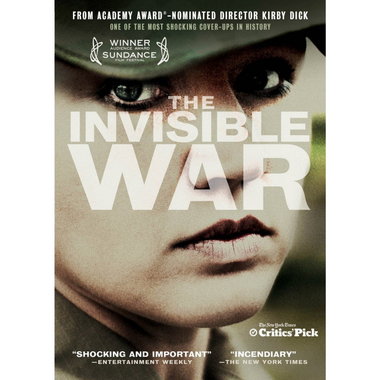
A sure-fire eye-opener for anyone ready for a tough subject, The Invisible War begins with a caption reading that the statistics in the film are from legitimate government sources. If that is true -- and as it progresses, it shows that it is -- it is damning, and unjustifiable, and there is a serious problem in our military. This is not typical fair regarding the US military though -- a standard doc which displays the horrors of war, or Iraq, etc. This is a film about rape, and how our military lets it happen: to its own members, by its own members, and brushed aside by many other members into higher and higher ranks. To see the women -- and men -- crying in front of the camera is to see the people that have fought for your (and their) freedom, cast aside because our military lets deviant pigs get away with it. And it's just that simple. There is no huge conspiracy here other than the fact that the higher ranking officers who could put an end to this simply don't care. If there were a film I saw last year that I hope would be an impetus for change, The Invisible War is certainly that film. Until that change is made, I will never let my daughter, or son, be in the military.

How To Survive a Plague. (David France)

A heart-breaking doc on AIDS advocacy groups ACT and TAG, and a chronological telling of their members stories, and how they saved their own future lives by staring down the disease in the days when no one understood it, by campaigning for awareness and challenging drug companies and politicians to step up. There are gripping stories here in which we see the disease, and the horrible way it can end young lives, and a group of people that rise up to raise awareness and fight it and find medicine (and insurance for its sufferers). The film as a whole is an incredible journey, but the first fifteen minutes are the most: using archival footage from the 80s, when these groups first began, it takes us through their early meetings, nary an interview or a word of narration. Millions were dying at the time, and the disease was dismissed by even hospitals who didn't understand it. Were it not for the protesting of this collective group of individuals (some gay and some not), AIDS might not have received the awareness it eventually did, and it certainly wouldn't be as manageable today. A film like this brings hope for the sufferers of a film like The Invisible War.

Indie Game: The Movie. (Lisanne Pajot and James Swirsky)

When you think about a so-called "starving artist," you usually think of a writer, or a painter, perhaps a ballerina or an out of work actor. You might think about that crazy looking guy with all the tats, the one you saw at the last city art fair -- he was stooping over his creation, lovingly close to the thing he made, and you were wondering why he made it, and where in the house you could hang it -- and maybe you understood that if he was a starving artist, it was deservedly so. Indie Game: The Movie is a little long-winded. At 103 minutes, it feels like a little much. But it's still a very rewarding film which shows us a side of art we may have never before considered. Here are some extremely talented men on a journey to create video games, games in which they feel a part of their own heart is coming forth. The creators of Fez and Super Meat Boy are made up of teams of only one or two people at the most, and it takes years for them to develop, and sell, their game -- if their game is to sell at all. The labor going into the making of these games is incredible, and like any act of art, or any long journey on a tough project, they get half way through it and realize it might not work at all. Their dream of finishing it, and selling it, might come true -- and they might make millions -- or all their dreams might soon be crushed. One of the makers even suggests, facing bankruptcy and having to carry on his work alone, that if he can't see some kind of decent end result on the current game he's making, it might be the end of the road for him -- the kind that ends with his life. Indie Game: The Movie turns out to be a very sentimental film about the creation process, the making of indie art. But it also balances on the idea of a common need -- we all need to figure out how to somehow make money. It's a fine line the makers of these lower-budget games face: the desire to create what you like, compared to having to sell it and get others to like it (and buy it) as well.

Monday, January 28, 2013

Non-lollipop Docs.

A few years back, I posted more frequently about the so-called, "Non-lollipop Docs" -- that is, documentaries which aren't just for suckers, and which give you some real-life meat to chew on. Here are a few I caught in 2012 on the big screen. In a few days, I'll also post about several I bumped into last year on DVD.

Searching for Sugar Man. (Malik Bendjelloul)

An easy pick for my doc of the year, this uplifting, stranger-than-fiction story is actually a contender for my favorite movie of 2012 -- doc or not. It's the kind of beautiful story the world needs to see, and the fact that this is reality makes it all the more stunning to take in. The story follows an investigation into the death of American musician Rodriguez, a non-seller in the early seventies here in the States, with two(-and-a-half) albums to his credit. The fact that his records sold millions as anthemic protest songs for the anti-apartheid movement in South Africa, coupled with the fact that Rodriguez knew nothing about that movement, including the amount of money he should have garnered from royalties there, is unheard of, and unfair-- but it's actually the smaller part of the story... The mass legend surrounding his on-stage suicide (did he light himself on fire on stage? or something even worse?) -- never corroborated -- and the investigation into how and why the musician from Detroit disappeared takes on an intensity of its own. I cannot say more than that, as this story is incredible, and could only happen from a time the Internet did not exist. To spoil what happens in the investigative Searching For Sugar Man feels like a crime to anyone with the desire to see the film. See this with as little info as you can going in, and then buy the soundtrack that's now available, a "Best Of" Rodriguez, featuring songs from his two released LPs. (I still need to track the CD down for myself, but I've had the title song stuck in my head for months.)

Bully. (Lee Hirsch)

As the father of a ten and a seven year-old, I know this is an over-used word, one that makes its way from claims on the schoolyard playground to Internet forums and twenty-minute spots on news shows like "Sixty Minutes" and the like. But the "Bully" is a reality in our culture, kids modeling what they see in their peers and capitalist parents, where only the strong survive -- and the weak (or different), well, we don't have time for them. Bully, then, travels from Mississippi to Oklahoma to Georgia, telling the stories of a few victims of bullying, two of which only in loving memory as they could no longer endure the pain and tragically ended their young lives. The film shows a society of kids who are either too embarrassed or too isolated to bring their problems to adults who might help -- and it shows adults (principals, teachers, parents) who either turn a blind eye or are helpless to figure out a plan of action (mostly the former). While we can empathize with the victims, Bully doesn't go too far beyond that. This is a point and shoot film -- the most it's going to do is pay more attention to a problem we already know about. It's an effective doc for the sympathetic way it relays these kids' stories (quite well, I'll add), but at the end it's no closer to an answer, a way to solve the problem. Regardless, it's an excellent call for an understanding of tolerance and diversity, a call that needs to be heard in our culture's climate, no matter the hearer's age.

The House I Live In. (Eugene Jarecki)

Like he did with American foreign policy in Why We Fight (2005), Eugene Jarecki takes a strong look at a truly American problem -- he investigates and dissects it, personalizes it, and drives home his point with ferocious clarity. The House I Live In differs from Why We Fight in that we are now dealing with a domestic issue -- drugs, the way we enforce our "war on drugs," and the crushing effect of old-school law on already impoverished neighborhoods and black culture in general. The flow of power from an outdated and unstoppable system (the "Powers That Be") is again Jarecki's target on display. The tagline for the film reads: "In the past forty years, the war on drugs has accounted for 45 million arrests,  made America the world's largest jailer, and destroyed impoverished communities." Jarecki begins with a personal story, that of his nanny's son, a life lost to this so-called war. He then broadens his scope to street cops, politicians, talking heads, and the marginalized many caught in middle of this system. Sometimes all it takes to be "caught in the system" is to be born on the wrong side of town. All interviewees express disillusionment at the laws and the many in jail -- all express anger at the target on the back of inner-city youth -- all seem to understand that the last forty years have turned a "moral" idea to a money making government machine now totally out of control. The only problem I have with The House I Live In is that while there are great examples on display, I learned very little while watching the film. Like most, I've already come to the conclusions the doc reached. ("Hey, I get it. I'm already there.This is more about a war on racism and poverty than it is about narcotics, or anything else.") But it's a powerful film simply for archiving this moment in the war's history -- a moment which represents the cry of an oppressed people looking for better answers than just another blind arrest, or a gangland death, or a trite little phrase like, "Just Say No."

The Flat. (Arnon Goldfinger)

There have been extremely positive reviews floating around the Internet regarding The Flat -- Ebert giving it three-and-a-half stars, and the film's own poster carrying a quote from Michael Moore, describing it as, "One of the best movies of the year." This tiny production from Israel, shot with what looks like a cheap, hand-held digital camera, has also won numerous awards -- and with a subject matter like this, I guess I can understand that. Documentarian Goldfinger begins the process of clearing out a flat which belonged to his deceased grandparents, only to discover the two were originally brought to Tel Aviv from Germany as part of a plan hatched by friendly Nazis -- including a very high ranking Nazi, and apparently a true friend -- to help the Jews avoid the ethnic cleansing and concentration camps of the time. As Goldfinger digs into his Grandma's books, letters, antiques and photos, the extent of the friendship with this man (get-togethers over coffee, both couples enjoying dinners on the town), and collaboration with the Nazi party in general becomes a bit of a shocker to the filmmaker and his mom, the shock eventually reaching all the way to their extended family in Germany, too. I can understand the profound nature of all of this, the shock of it all. Goldfinger seems to be not only unraveling his past, but also implicating his family, perhaps their honor, too -- but certainly their identity. The problem I have with the doc is that it might have been a better book than a film. After ten minutes, the film spirals into utter boredom, the kind that you feel guilty for, the kind that makes you feel like a bad person and you wish you could try harder to stick with it. It's of little consequence to the viewer personally, and that's actually where the film fails. This may have been a huge issue for this family -- something anyone who sees The Flat will no doubt recognize -- but it translates little to a heart outside of the drama. (At least this heart.) It's a little dull, it goes on way too long, and I was hoping the best for the whole family, but at the end I was just glad for the credits to roll.

Sunday, January 27, 2013

A Woman Under the Influence. (1974) John Cassavetes

Crazy Times Two for A&F Nominations.

"Mabel's not crazy... She's unusual -- she's not crazy. So don't say she's crazy. This woman cooks, sews, makes the bed, washes the bathroom. What the hell is crazy about that? I don't understand what she's doing. I admit that...But I think I know..."

The words, spoken by Mabel's husband, Nick, are to a particular situation at the beginning of A Woman Under the Influence -- but they might generally be applied to their married relationship as a whole.

Mabel, played by Gena Rowlands (Oscar nominated for Lead Actress in 1974) is in a state of serious emotional and mental deterioration, spiraling out of control and sometimes scaring those close to her. What she suffers from exactly is hard to say. On some level she knows she's "wacko," as she says to Nick. But she wants to please, she wants to do right -- she aims to be the best wife, mother and friend that she can be. Only she can't get it right, try as she might, because at the core she is, as they've both said, "Wacko."

Peter Falk as Nick, the husband filled with love in spite of her regressive state, is also incredible in this devoted yet volatile performance. Nick is warm and affectionate when Mabel goes off the deep end, and even when he loses his temper (and who wouldn't with her?), he forgives and believes and trusts that she'll do better next time. The way he looks at her with endearing amusement, even as he knows in moments that she's nuts, is a look that might define a kind of definition of true love.

Their three kids aren't old enough to know they're dealing with a mom who is "off." When she asks how they see her, one of the boys pipes up: he sees her as "smart, and pretty -- but nervous." With a mom like this, from a child's perspective, she might actually seem like the liveliest, coolest mom on the planet. Mabel's still got a few years before they'll be embarrassed by her behavior -- but there's not a parent in the world who won't have to deal with that.

As her state deteriorates, Mabel's actions throw the family into chaos. Nick goes from loving Mabel through all of her weird ticks and odd displays, to realizing she's no longer fit for a guardian in the home. After Nick and his mom come home to naked children in the house and a stranger in the bedroom upstairs, they place a call to the family doctor.

In the doctor's presence Mabel completely unravels (and these are the scenes where Rowlands truly leaves her mark) -- unraveling partially from the fear of being committed, and also because she knows she's lost Nick's faith. She goes from trying to fight through this bug in her brain, to being aggressive and scornful, defying logic with hisses, and yet begging to stay with her children. At this point anyone can see she's too out of control to stay at home. Her actions, not her heart, seal her fate to an institution.

And when Mabel goes away, Nick learns that sometimes madness is a learned behavior.

Madness, in this film, is treated in a thoroughly humane way -- we see the real person in the struggle, the soul that wants to survive. Mabel's strongest desire is to be normal for her kids, for the people around her. She wants nothing more than to come to terms with her health crisis. When she suffers, we see her fight through the affliction, trying to be and do right, trying to love and desperately trying to not be socially awkward -- all the while teetering on the edge of a nervous breakdown.

She'll be locked up for six months and Nick will have to find other ways to take care of the kids. This is an incredible film about how mental deterioration affects not only the afflicted person, but how it affects the family as a whole.

I've done just a bit of research and listened to the commentary track (created in 2004 for Criterion, featuring camerman Mike Ferris and sound recordist/composer Bo Harwood), and I find the story of the creation of A Woman Under the Influence as intriguing as the film itself. The film's Wikipedia entry has an adept summary:

John Cassavetes was inspired to write A Woman Under the Influence when his wife Gena Rowlands expressed a desire to appear in a play about the difficulties faced by contemporary women. His completed script was so intense and emotional she knew she would be unable to perform it eight times a week, so he decided to adapt it for the screen. When he tried to raise funding for the project, he was told, "No one wants to see a crazy, middle-aged dame."[1]
Lacking studio financing, Cassavetes mortgaged his house and borrowed from family and friends, one of whom was Peter Falk, who liked the screenplay so much he invested $500,000 in the project.[1] The crew consisted of professionals and students from the American Film Institute, where Cassavetes was serving as the first "filmmaker in residence" at their Center for Advanced Film Studies. Working with a limited budget forced him to shoot scenes in a real house near Hollywood Boulevard, and Rowlands was responsible for her own hairstyling and makeup.[1]
Upon completion of the film, Cassavetes was unable to find a distributor, so he personally called theater owners and asked them to run the film. According to college student Jeff Lipsky, who was hired to help distribute the film, "It was the first time in the history of motion pictures that an independent film was distributed without the use of a nationwide system of sub-distributors." It was booked into art houses and shown on college campuses, where Cassavetes and Falk discussed it with the audience.[1] It was shown at the San Sebastián Film Festival, where Rowlands was named Best Actress and Cassavetes won the Silver Shell Award for Best Director, and the New York Film Festival, where it captured the attention of film critics like Rex Reed. When Richard Dreyfuss appeared on The Mike Douglas Show with Peter Falk, he described the film as "the most incredible, disturbing, scary, brilliant, dark, sad, depressing movie" and added, "I went crazy. I went home and vomited," which prompted curious audiences to seek out the film capable of making Dreyfuss ill.[1]

Which very much characterizes the intensity of this story.

I've read elsewhere about Cassavetes, the signature style he brings to his films -- the "auteur" idea, in which you know you're viewing a Cassavetes film simply by watching it. This being my first experience with the deceased director, I can't say at this point that I see more than just an excellent film with bold performances, made in the mid-70s.

However.

I did notice a particular style in the way the camera likes to move -- unexpected, sometimes catching you off guard, with various angles and tilts thrown in for surprising emotive power. Unrestrained edits, too, allow these bold movements an even greater degree of surprise. I'm wondering whether I'm onto the Cassavetes style by seeing this. I'll look forward to tracking down more of his films to find out.

Monday, January 21, 2013

Smiles of a Summer Night. (1955) Ingmar Bergman

Non-Bergman Bergman for A&F Nominations.

I have to admit I wasn't prepared for Smiles of a Summer Night, and I am not in agreement with the many favorable and positive reviews I find glowing around the 'net.

But at any given moment if you were to ask me to make a list of my favorite directors, Ingmar Bergman would make my Top Five, or my Top Ten, every time, easily.

Raised by a minister, he became agnostic as an adult, and every question between those two extremes is raised in the body of his work. Bergman's films have a certain fingerprint, a kind of atmosphere that only he creates -- there's always the search for God, for meaning, a reason to existence, but it isn't content with faceless or nameless spirituality. His films show, and then deny, that something is out there -- but whatever it is, if it is, it's just beyond our reach. His doubt, "adult" and logical in its nature, seems like an expression of a forlorn (and child-like) faith. The shadow of the Almighty creeps around every corner in his films, even as Bergman himself hides away and believes (pretends?) that it doesn't exist.

His style typically displays this, somewhat somber in its tone. His style typically matches his questioning nature, the stories of the meanings of existence he loved to write and direct.

It was a slow process for me to learn about Bergman, and why I so love his films. But over the years, the more I researched (and the more I continue to research by continuing to dig into his oeuvre), the more I am typically rewarded.

I was recording in a studio in Birmingham, England in January of 1996 when I was first introduced (on laser disc!) to Fanny and Alexander ('83). It was that film that, as a preacher's child, left a definite impression on me. The father in this film is a preacher, and he is a beast. Whereas my dad is no beast, but definitely a faith-filled man with an agenda, I understood some of the fear of the children in this film. Real and imagined concepts of ghosts and God constantly scare the children in this film -- but nothing frightens the kids more than the concept that God Himself, very much the same form as dad, could be the same juggernaut you fear.

It took a few years, but I eventually made my way into the black and white snowy archives of older Bergman, beginning with perhaps his two most well-known, The Seventh Seal and Wild Strawberries (both from 1957, the auteur's finest year). Later Bergman wrestled with the same spiritually significant themes in his Faith trilogy, which may have been the pinnacle of these deep-seated musings: Through a Glass Darkly ('61), which Bergman has said "conquers certainty"; Winter Light ('63), which he then describes as "penetrating certainty"; and The Silence ('63) ("God's silence -- the negative imprint."). All three mesmerized me, shaking the foundations of my structured belief, and yet opening up new ways to a larger and better faith in a more mysterious and silent God. (I wrote more about the Faith Trilogy beginning here.)

Since then I have found repeated greatness in The Virgin Spring ('60), Persona ('66), Shame ('68), Cries & Whispers ('72), and Autumn Sonata ('78, and the one Bergman I saw and know that I loved, but don't remember it very well now).

I love this man. I love his heart, and his search, and more than anything, I'm thankful for his prolific output, and the truthful heaviness of his films.

But immediately noticeable about Smiles of a Summer Night is that it does not feel like a Bergman film at all. It feels like pre-Bergman Bergman, or a man who hasn't yet come into all the greatness I just described. It feels like it's 1955, before all the other films I just listed, and right at this moment Bergman hasn't yet found his voice.

It also feels cheap, and all too easy. It feels like something that came out of Hollywood at the time, only spoken in Swedish, with frolicking orchestral music in the background and a flair for the easy laugh. Is it unfair to the film itself that I know a bit about Bergman from a time after this film was made? Could I have sat through this classifiable "romantic comedy" (i.e., "romcom") (i.e., yuuck!) had it been another director and I didn't approach the story with Bergman bias?

Doubtful. Here's your story:

He is married to her but likes the other gal instead, the other gal likes him back but has taken on a new lover, the new lover is married but won't let anyone fool around with his mistress, but the maid likes him and his son and flirts with both and slaps the one but then shows him her boobs --- and so on, and so on, etc., etc., ad infinitum, ad naseum, et al.

Only the humor is so put-on it feels like you're wading through theatrical melodrama to get to it -- and even then, only for a slight philosophic chuckle -- and the production has a slicker feel, like Bergman knew he needed the cash, like he needed to make this one count at the box office. Indeed, some research around the web shows that this was his most outlandish production cost at the time of filming ($100,000), and that the film made money world-wide upon release (you can still find a glowing review from 1957 here), and that after Smiles of a Summer Night was made, so goes the rumor, Bergman never had to worry about the cost of a production again. This was his hit, and after this, the finances would simply be there.

I'm sorry, but this has the stench of a mainstream sell-out. And yeah, they even had those in 1955.

I know there are artists who have to do this sort of thing in order to create the kind of art they want to make. In fact I just wrote about Woody Allen, who in his film Crimes and Misdemeanors, plays an artist who needs to make a documentary on his successful brother-in-law (Alan Alda) in order to continue with the project of his dreams: a documentary on an Old Testament philosopher no one has heard of. Or -- you hear about the artists who work the jobs they hate in order to put food on the table and continue to chase after their own pursuits. The broke artist in the creative process, selling out to latch onto his dream, working the mill or the mine and running off to showcase stuff on weekends.

It's a noble idea, and a worthy pursuit for many. It's something I struggled with from time to time as a musician. (Yes, I did play six weeks on tour with that certain country band in order to raise cash for a debut recording in my second European alterna-rock band.)

But watching Smiles of a Summer Night simply feels, to me (a Bergman lover), like humiliation of the greatest kind.

They say he had a great sense of humor, between periods of depression and great anxiety.

Sadly, I guess there are polar extremes buried inside all of us.

Smiles of a Summer Night might be a nice little Swedish 50s rom-com, if that's what you're in the mood for. If you're in the mood to see a film by Ingmar Bergman, I say this is no film by the Ingmar Bergman I know, and you should avoid this monstrosity at all costs.

Saturday, January 19, 2013

Two Woodys.

Crimes and Misdemeanors. (1989)  Woody Allen

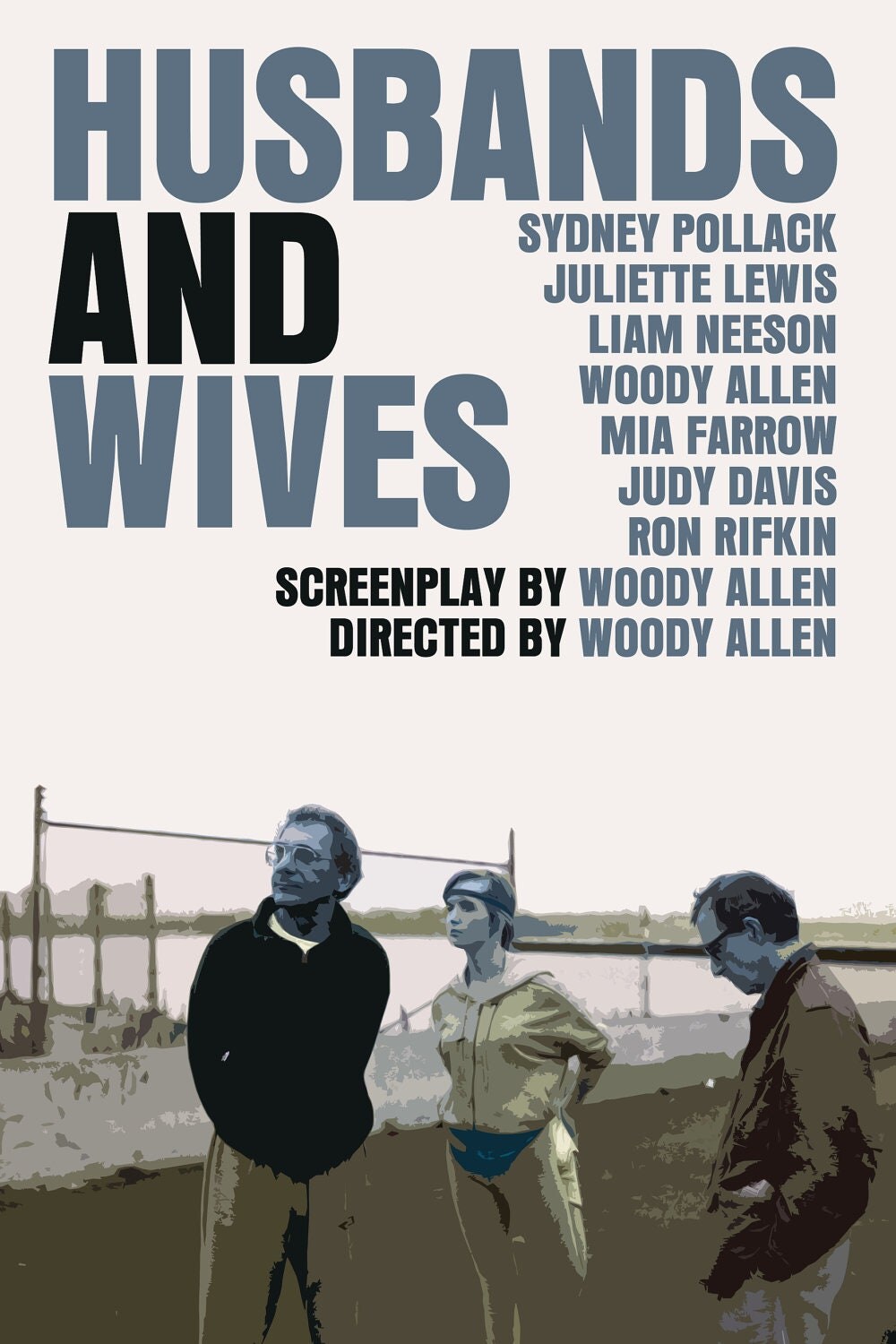
Husbands and Wives. (1992)  Woody Allen

I've been falling drastically behind in my blogging attempts at keeping up with the A&F Marriage Nominations, but here are two I've caught over the last couple weeks that completely took me by surprise.

Why surprise? Probably because I don't consider myself the biggest fan of Woody Allen. I've got nothing against him, in fact I've enjoyed quite a few of his films over the years (Midnight in Paris even crept into the #10 spot on last year's Top Ten Films) -- but somewhere in the back of my mind I've labeled Allen-directed films as "romcom," and it's a genre I typically try to avoid, no matter how well-made.

It's a shame actually, because looking over his list of films, at least five have left a positive imprint in the back of my mind. So I guess my enjoyment of the two films here should really be little surprise at all.

Crimes and Misdemeanors, a film which sits at #79 on the A&F Top 100, sets its eye firmly on ethics, as it deals with the ramifications of both adultery and murder. It questions whether certain sins are tiered as higher or lower, whether sin and morality are man-made constructs which keep a peaceful code and hold things together -- ingrained in our psyche to keep humanity from tearing ourselves apart -- or whether these codes of conduct are derived from a larger plan, coming from a God (here represented from Jewish tradition), who has rules for mankind lest we be thrown into the bowels of hell.

The film follows parallel story lines, both intricately weaved into this theme. Allen's character, Cliff, is a documentary filmmaker, compromising his principles by taking a better paying job creating a TV-style documentary on his more successful film-making brother-in-law (played by the ever-exuberant Alan Alda). Cliff would rather be taking a new mistress and working with her on the documentary he had planned, which centers on an aging theologian and Old Testament philosopher who is a little out of touch with the ordinary citizen. It's a safe bet that nothing here is going to work for Cliff -- that he'll be let down in numerous (and lightly comedic) ways before his part in the story comes to an end.

The other story follows Judah (Martin Landau) as an opthamologist in serious trouble. An affair he has had for the previous two years has spun out of control, his mistress threatening to approach his wife with the details. Judah's brother, a man with a sordid past and crimes too many to count, recommends the easiest way to take care of the problem: get rid of this mistress, quickly, and permanently. Later, Judah has some guests over at the house when he receives a phone call from his brother. The deed is done. We watch as his betraying heart grapples with the guilt. We watch as he grieves, but gets away with it.

Two ghostly scenes I will always remember from Crimes and Misdemeanors. Both come out of nowhere, and both feel like visits from Jacob Marley to a quivering Ebeneezer Scrooge. Landau's Judah has a dreamy drop-in visit from his rabbi, who is also a patient and friend. The dreamy conversation they have describes the implications of Judah's potential crime, drawn up so tightly as to invade the very light in the room. Later, on a simple spontaneous visit to the house he grew up in, Judah ends up in conversation with his entire extended family (around a long rectangular table in an imagined dinner together) on fixed Universal morality, with the suggestion that whether there's a God or not, murder will "out" itself.

The film ends at a cocktail party where the two finally meet. Judah gives Cliff an idea for a film, and begins to talk, in detail, about the events of his crime as it has played out. The two sit and sip liquor: the one that seemingly gets away with everything, and the more innocent one who will be the loser no matter what the future holds. It is a strange combination, these two and this conversation, perfectly placed at the story's end as a climactic dialogue of sorts. How fitting that a conversation, the stuff where Allen excels, would make for a perfectly climactic ending to a movie based less on plot and more on underlying motivations.

This is a witty film, full of interesting questions about sin and the possibility that there might not even be such a thing if there is no higher power. It reads like a story, in fact that is what it is -- but it feels like a paper, a treatise of sorts, or an essay for a college philosophy class. The fact that it's still so entertaining while weighing all these heavy thoughts speaks to the level of talent in Allen's writing.

Husbands and Wives is a little different in the way it formally presents itself. The story is told in present tense, and begins with a couples get-together in which Jack and Sally (Sydney Pollack and Judy Davis) meet at the apartment of Gabe and Judy (Allen and Mia Farrow, acting at this point in their last year of marriage), ready to go to dinner as the four sometimes do -- but on this night Jack and Sally begin with a casual announcement of their separation, the shocking news of which crushes Judy. The couples proceed with their dinner plans, trying to make the best of their night, but the film takes us by surprise when it suddenly cuts to Judy, breaking the fourth wall in a documentary interview, trying to piece together why she was so upset.

From here, we never really know what we're watching. Is it a story, or a documentary, or a documentary crew following the characters in present tense reality? The answer to this question turns out to be, "Yes."

This isn't the only thing that threw me for a bit of a loop in watching Husbands and Wives: the nature of the handheld camera work, the hard edits which establish shifts in emotional response, the zoom of the lens itself which functions in much the same way, and back and forth weaving between straight narrative and documentary interruption are all a bit "edgy," in my opinion, for the time the film was made. Created in 1992, it feels like it must have been a bit ahead of the curve when it came out. This is smart story telling, not happy with taking its characters simply from Point A to Point B, but throwing in a few indentations and formal (artsy) ticks along the way.

The dialogue, again, is top notch. Like the presentation itself, and the indentations I've noted, Woody Allen dialogue is never used as a plot device to simply propel characters in a narrative arc; rather, the way these characters speak to each other springs from the kinds of real conversations people in this setting might actually have. The tempo is lively (one has to sometimes wonder whether anyone is allowed to take time to think before they speak), but there is always something deeper going on than a simple convo that leads to another scene.

Like Crimes and Misdemeanors, Husbands and Wives will also end ironically with the director being the most unfulfilled of the whole cast. One has to wonder if this was a period in Allen's life when in two films he comedically expressed some inner turmoil.

Both films are worth seeking out, and will be getting very high rankings in the vote I'll be taking part in this weekend. As far as films for the marriage category, they'll both be getting a solid 4/5 from me. I've been happy to be introduced to these older gems, and I'd love to seek out other older films from Woody Allen.