Thursday, February 3, 2011

Bride of Frankenstein. (1935) James Whale


Four years passed between Frankenstein and its first sequel, but the story picks up on the same savage night of the supposed destruction of the creature, in a fiery inferno sending his soul back to hell.

Then again, we 21st century media-savvy types (which is pretty much everyone, more or less) know that no creature dies in a first film, no matter how much its makers want you to believe it -- no matter how hot the burning mill, no matter how many citizens saw the structure burn to ashes. We of course know that no alien, no mummy, no Jason or Freddy or Michael will be dead when the credits have left a first film's screen. You can't have a second Creature Feature if you haven't got a creature to feature.

There is genius found in moments of Bride of Frankenstein. I love how they kept the creature alive, escaping the tormenting flames in a mote below the mill. And the final act is any film lover's delight.

I also thoroughly enjoy something as simple and fun as the opening credits, which piggyback off Frankenstein's use of "?" for The Monster, using "?" once again for The Bride. There are so many moments where Bride of Frankenstein gives its all in being just as good as the original, you've got to love it for its heart alone.

Author Mary Shelley, played by Elsa Lanchester (who also plays the impressionable Bride in the outstanding final chapter), sits cozily indoors with a couple of highbrow if not caricatured gentlemen, the wind whistling and the thunder crashing outside. One of the men, claiming the status of "England's greatest sinner," considers how warm and safe it is inside the house, while an angry Jehovah viciously thunders outside. "How beautifully dramatic," he says. "The crudest savage exhibition of nature at her worst without, and we... within..." He claims his head is unbowed to the thundering God outside. But who would fear a supposed God if kicking back by a comfy fire was all it took to protect you from his wrath?

The men talk highly of the creepy chills of Mary's original Frankenstein story. They narrate over images of the film (blogged about Here), a brief recap for the sake of the audience's memory from four years before. (There were no television premiers or TiVo in 1935.) They implore Mary to share the rest of the story, so she launches into the sequel, the story of the creation of the Bride. It's an almost perfect beginning to the film.

Almost, because as her story emerges there's an immediate disconnect from the original, quite noticeable within seconds. The medium of filmmaking changed quickly in four years, the times obviously persuading director James Whale to stuff oodles of musical score in the background. It's interminable presence is constantly noticeable, a never-ending standout out like a splinter in one's thumb. It nulls the tension so easily relayed without filler in the original film.

The writing and dialogue are so dark and crisp that seeing it 80 years later and complaining about the score seems unfair. But the problems don't end with the score. We're immediately introduced to a side character, Minnie, played by Una O'Connor, used mostly for comedic effect. She is agonizingly horrible, not funny for a moment. She brings camp to a film that wishes to reject her and her whiny voice and its shrieking screams. She is truly the most awful thing in Bride of Frankenstein, and watching her made me think the person responsible for casting her hadn't seen the original. Then I found out James Whale casted her.

There's but one line that may have worked for O'Connor as a decent foreshadowing to the rest of the story: "Oh what a terrible wedding night!" she cries, in regard to the botched wedding plans of Dr. Frankenstein and his bride. But after the brittle scream that escaped the woman just moments before this interesting sentence, all you wish is that the creature had killed her when he had the chance.

The film is a much bigger production than the original, but missteps like these keep killing it when it almost gains a foothold on tension.

Bride of Frankenstein desperately tries to deal with the same gripping religious themes the first film took on, and if these particular scenes were viewed on their own they might be as meaningful and powerful as they were there. But in the context here, with attempts at humor included (and a ridiculous scene of miniature royalty in jars, only there for a 1935 special effect), scenes of the creature tied to a stake and mocked like Jesus on the cross, or of him partaking in a sort of bread and wine communion with a blind old man he calls "Friend," are short-lived, momentary, mixing horror and camp horribly and accomplishing neither one.

Bride of Frankenstein follows two basic story lines until that final, superbly cinematic moment at the film's end. The first is the creature itself, captured and kept in a dungeon in shackles, easily escaping, and left to wander the countryside until meeting the blind old man. He's generally in trouble with all mankind until once again meeting up with his insane maker.

The parallel story follows Dr. Frankenstein, who at the beginning claimed to his would-be bride he'd had enough of trying to be a mad scientist: "I've been cursed for delving into the mysteries of life." But then he's lured by a colleague, the similarly crazed Dr. Pretorius, and the two carve out the ultimate plan for a race of living creations. A female version of the creature is a necessary first step, and hopefully the two will like each other.

With the grande finale culminating in the creatures, the psychosexual, symbolic gender relations and the tensions therein, I kept wondering if the film would have worked a bit better as a short film, or perhaps by simply adding this story to the original. But that is not the answer. The films each suit their length at 70 and 75 minutes respectively, and the idea of putting the bride in the original would have ruined what is already a masterpiece.

The bottom line regarding Bride of Frankenstein is that it was either over-developed, or just plain developed wrong, even though there are moments, particularly in its end, that are triumphant.

It's a mish-mash. A hodgepodge. A motley assortment that shifts between genius and utter stupidity. But it brought us one of history's most perfectly climactic moments when the Bride is finally and awfully revealed.

Sometimes you have to wade through the gunk to get to the cinematic gusto.

Wednesday, February 2, 2011

Frankenstein. (1931) James Whale


I haven't seen Frankenstein in decades, probably not since I was a prepubescent freckle-faced punk. The last time I saw it was most likely on the Saturday afternoon Son of Svengoolie show, on WFLD Chicago. It would have aired sometime in the early eighties, probably having commercial breaks featuring Svengoolie himself, the weirdo/host-in-a-coffin who had rubber chickens whipped at him every weekend and continually made references to Berwyn. (audio: "BEHR-winnn!")

Screenings like these, fun as they may be, unfortunately do more damage than good to the general perception of a film like Frankenstein. I always knew the novel, first published by Mary Shelley in 1818, was more significant than shows like Svengoolie and their like deserved. But having not seen the original film as an adult, I didn't realize what an achievement the story is on screen. It's not just a classic novel -- it's a classic in cinema, a film that obviously set a high standard not just for horror, but for motion picture Story.

Described by Shelley, both as the author and a written-in character in Bride of Frankenstein, as, "A moral lesson of the punishment that befell a mortal man who dared to emulate God," the opening scenes of Frankenstein are immediately concerned with a religious milieu much larger than an average monster movie: sin, death and the grave, the grim reaper, the cross, robbing the grave, and taking an executed man down from a cross. From there, the film compares and contrasts science and faith (spread across the film in many obvious references); immortality and the end-all mystery of death
(Dr. Frankenstein cries at one point, "Now I know what it feels like to be God!"); creation vs. recreation (is Dr. Frankenstein a creation, too? Does his Creator have an opinion on his creation?); and nature vs. nurturing (the switching of the brains, not present in the book but added into the movie, reminds us of just how little we've learned in the past eighty years about the brain and how it functions). Each of these themes are transcendent. They transcend the boundaries of time. You find themes like this in much great literature throughout history. Is it any wonder this story has been around for 190 years? How many other monster movies have come and gone since Frankenstein was originally brought to the screen?

The idea, too, that this is a monster movie intrigues me when I consider who or what the real monster might be. Is it the creator or the created? Is it the stirred up mob with their fiery torches and barking dogs, chasing an ugly, newborn giant in the woods, trapped in mob mentality, aiming their venom at the wrong object?

Does a monster even see itself as a monster -- does it recognize how it's seen? A speechless brute in this film, Frankenstein's creation can't speak for himself. But in Bride of Frankenstein, he does learn to speak in small words and phrases (contrary to the original book, where he went on for pages in philosophical musings). One of the first words the creature learns is, "Friend."

Frankenstein is a story about a blundering humanity that would rather worry about the afterlife or chase fear than connect. It's incredible how relevant this theme still fits today. In a two-party system with a judgmental church, The Monster remains that thing on which you project your worries and your fears.

With stunning cinematography that moves and brings the creature to life, and a musical approach closer to silent cinema than modern scares, Frankenstein's remarkable achievement in tension comes close to rivaling that of Murnau's Nosferatu, of the silent era. Though Orlock might be seen as a creature of blood and death and Frankenstein's Monster might be seen as a creature of death and the brain, both creatures revolve around temptations to become immortal, the idea that it is possible to be like God. Both creatures reflect the first lie told to man, their stories using thousands year-old themes, as old as the third chapter in the Book of Genesis.

I had no idea the film was this important in the canon of horror, nor could I have ever known what a great film it is even outside its genre classification. I'm glad I revisited it as an adult. I've found a new classic that I love.

Tuesday, February 1, 2011

A Black and White February. (2011)


This can be a colorless time of year, that is, the arctic hell of February in West Michigan -- where lake effect know is always closing in from Chicago, crossing the great lake and howling on our beaches in white-out, blizzarding chaos.

I love snow -- if I can ski in it. And really, I'm too broke for that these days. So snow takes on a new meaning for me, a meaning that might resonate with a few others, as well: layer upon layer of washed-out white, covering the parts of the asphalt you need to see to keep from slipping on ice and breaking your neck.

The other day, I was driving down the road taking my daughter to her gymnastics class -- or at least, I think I was on the road. I really couldn't tell. If I was on it, it certainly wasn't visible, in fact I couldn't even see the signs next to the road. Every once in a while I saw a traffic light, and I think I stopped for most of the red ones, but between a half-working defroster and the white-out itself, there wasn't much more in front of me than a blank page.

Even today I was driving in Grand Rapids listening to AM radio from Chicago, and they were finally calling for our annual dumping. One to two -- not inches, but feet! And if Chicago is getting one to two, you know West Michigan will be getting three to four more.

Daytime here is white. Nighttime here is black and white monochrome. Sometimes day is a little bit black and white, with tones of sepia or a gray mush mixed in.

Now the TV is on and there's a graphic in the lower right corner. It bounces between three items: "Winter Storm Warning," "Blizzard Warning," and "Gale Warning." Sheesh. I don't even know what a "Gale Warning," is, but it sounds Irish and ancient, harsh and terrifying. My eight year-old girlie, always on the cutting edge of the weather patterns (thunderstorms terrify her, so she tries to stay informed) tells me "gale" means "wind," so now I'm trying to figure out why they don't just call it a "Wind Warning." (It's my five year-old son that should come with a "Wind Warning.")

In honor of what they're calling today an approaching 10-16 inches of snow, which will easily make this the hardest and most biting month of the year -- typical for a mad month that, year after gruelling year, makes you long for long underwear, a robust fire and the days of your youth (days when the warm body next to you negated your need for an electric blanket) -- I'm declaring this a frenzied BLACK AND WHITE month at Filmsweep. I'll be concentrating my focus on B&W films I love, as well as ones that are new to me, and we'll see if there's love.

I'll begin with a couple of great horror films from the thirties, then take a sharp turn into new territory for some 40's Hitchcock and 50's Max Ophuls and Andrzej Wajda. I'll revisit old friends like Lynch and Nolan and von Trier, and find out why Jim Jarmusch has a knack for black and white crackling to celluloid life.

Will I be able to post only about black and white films for the month? Probably not. The A&F Top 100 is scheduled to go public on February 7, and I'll also need to get to a few new theater screenings. Plus, the Oscars are looming at the end of the month, and any decent modern blogger should give predictions and reactions, right?

Still, I look forward to making it a "mostly" black and white month here at Filmsweep, my warm little home on the web. I'm hoping that March will reward with color for the lengths I'm willing to go for February frenzied film.

Monday, January 31, 2011

Lars and the Real Girl. (2007) Craig Gillespie


I don't know how much I'm allowed to reveal about the results of the A&F Top 100 vote this year -- it goes public in just a few days -- but it's safe to say I can talk about one of the films that didn't make it on the 2011 list, a staggering oversight which I feel I should have campaigned much harder for. I only saw Lars and the Real Girl for the first time in mid-December, so I didn't have much time to put a campaign together before the vote, which was just after Christmas. The holiday season probably threw me off a little bit, too. You know how you never get any of the normal stuff done during the holidays, right? Still, I wish I'd made a stronger case for a film that didn't make it on what I consider the greatest list of the greatest films. The next vote is in 2013. I'll begin the new campaign now.

First of all, I must admit the film took me by surprise. Oh, sure, I knew it received indie accolades here and there, and I'd listened to quite a few trusted friends rave about it for the past three years. But, I mean -- a guy that falls in love with a sex doll? It sounded morbid, or prurient. One or the other. It didn't seem like the kind of film that would honestly be worth my time. The concept reminded me of very bad comedy, the kind with guys and boobs and beer. The kind that might have been funny when I was fourteen but don't have much taste for now.

So when my wife began talking about it (I'm still trying to figure out how she saw it before I did), and when it was actually nominated for our list, I guess I finally came to my senses and said, "OK -- too many trusted sources are telling me about this one. This is a two-hour risk I need to take."

So I saw it one night -- and have been gushing ever since.

It's a wonderful story. It's warm, very full of heart, the kind of heart that makes you want to do better, be better, and believe in the better aspects of your fellow man.

It's the story of Lars, a somewhat recluse Minnesotan, living in his brother's garage in the wintry cold of small town life. Lars works a regular old cubicle job in the day and the rest of the time hides from his brother and sister-in-law, who live inside the house. He keeps to himself like a winter hermit in the garage, avoiding breakfasts and dinners inside until sis stalks and tackles him and practically drags him in for dinner.

Lars is quiet, polite, kind, and on his own. He's happy to be that way. He's not hurting anyone by remaining a bit isolated. He does his job and pays his bills and life is fine for him as a gentle loner.

When a co-worker shows Lars a website of gals-put-together (what color hair do you want her to have? how big do you want her chest to be? etc.), it would, in any other movie, be a filler scene, perhaps to simply show one of the perverse tendencies of the guy in the next cubicle. Not so here. A few weeks go by and suddenly a very large box addressed to Lars shows up at the house. It's indescribable other than to say that Lars has found himself a new friend -- like a six foot Barbie doll he'll have to dress and feed and imagine all her thoughts.

The box is discreetly opened and Lars brings his friend out to meet the family. He's strangely invented a history for her, and lets bro and sis know about her background: she's a Brazilian-Dutch missionary's daughter and a born-again Christian. She's a mesmerizing, good-looking chick by any standard, with butt-length black hair and a body to die for. Her name is Bianca, by the way. She's silent to all those who aren't Lars.

If you haven't seen the film, I know this sounds crazy. And it is, don't get me wrong. We're not watching a comedy -- side splitting as some of the scenes turn out to be (I think I fell off the couch laughing at one moment) -- but we're watching the beginning of some kind of mental illness in Lars. It's hard for the town doctor to pin the illness down with a name or proper diagnosis. And again, Lars is no threat to anyone around him. But he's showing up at the doctor's office and different social occasions with Bianca, and he's the only one who hears her talk, and he takes care of her -- and he's weirding people out.

If you've heard of the film's premise but not seen it, you might jump to the conclusion that Lars's love for this girl is a sexual issue. It is not. In fact, I dare say to any woman ever reading this: You could only be so lucky to be Bianca and have Lars as your best friend. He is such a gentleman with her, loving and kind, watching out for her needs and taking care of her. He talks to her, questions her, asks her about her likes and dislikes, and later, in relational arguments, questions her likes, which at this point are less and less him.

Every relationship will deal with troubled weather. Lars and Bianca are different in many aspects, but certainly not this. The second half of the story deals with their troubles -- why she won't accept Lars's constant marriage proposals, and her sickness, which worsens to the end.

The good folk of the little town, and how they come to accept this relationship and help Lars in it, are the key to the joy found in Lars and the Real Girl. Their kindness is overwhelming. It's not sappy -- it's admirable. This is the kind of film that makes you want to look at people differently, even those struggling with problems you don't get, problems you'll never understand. Lars and the Real Girl suggests that we don't need to fully understand in order to retain our sense of love and compassion, and that our existence here is to reach out and help.

Comical, subtly serious, full of faith and determined to approach mental illness from a unique and fresh perspective, Lars and the Real Girl is too complex to fully delve into in one small post on a blog.
I guess I'll simply wrap up by saying it's one of my overlooked favorites from the past few years, highly recommended for those who want to encounter a gentle spiritual lift. It's a beautiful film, filled with wonderful characters captured in a story that's as strange as it is miraculous. If you haven't seen it, add it to your list of the ones you missed. It'll be worth your time, and that's a promise.

Wednesday, January 26, 2011

Animal Kingdom. (2010) David Michôd


There's a slight spoiler in the fifth full paragraph below in regard to what doesn't happen at the end of Animal Kingdom. That might sound like it's not that big of a deal -- after all, it's about what doesn't happen as opposed to what does, right? It's still worth mentioning now, and if you care at all about spoilers, don't read past the next four paragraphs.

You've got to appreciate Animal Kingdom for its sheer ambition, if nothing else. Director David Michôd intentionally conceived of a heist film without a single heist in it, a film about bank robbers without a single bank robbery. To his credit, he added stills of other
(apparently real-life) bank robberies over the opening credits, due to the fact that the first viewing audiences were a little thrown off in navigating the nature of the missing criminal acts. The stills do help. And I find the "heist movie without a heist" an interesting idea, one that I appreciate exploring, because the negating of typical bank-robbing scenes should make room for a deeper story to emerge, opening up characters, their homes and their relationships with each other in much more provocative and interesting ways.

Here we have a matriarchal crime family where all the grown-up boys do the dirty work mom inspires. (She's been referred to as the "Queen Pin" in other places on the Internet.) The actual story revolves around Josh, sometimes called "J," grandson of the matriarch, who says he's eighteen at the beginning of the film for legal reasons but is probably only seventeen in actuality. We never fully understand how all the pieces tie together, but somehow Josh loses his mom to a heroin overdose, which doesn't seem to emotionally register with either him or Grandma Queen Pin. He ends up living with Grandma, which means he might as well be living with the criminals as well. They spend a lot of time at Grandma's house. It's her constant desire to be close to the "boys," she gives them hugs and (somewhat strange) kisses on the lips and consoles them when one is shot by the police.

Josh is a bit dull. He's not outright stupid, but he doesn't always speak his mind, so it's hard to say where he's at sometimes. He's thought to be weaker than the rest of the gang, and typically takes orders and comes off as somewhat detached from the events. This is no character you'll find in a Tarantino film (not that I always need that -- see my recent blurb on Lourdes or my reaction to Illégal).
The newly introduced James Frencheville plays Josh just fine -- the dullness isn't due to the acting, but this is a dull character, which is at times no fun to watch. He drifts in and out of trouble with the family, and then the law, and then he's between a rock and a hard place which is the law and family both crashing in on him. But he barely raises an eyebrow, and it's not because he doesn't care. He's just slow, a bit of a dolt -- someone you wouldn't want babysitting your two year-old. I found myself wondering how a person appearing so witless could manage to get out of so many scrapes and keep himself alive and breathing. He doesn't seem capable of taking care of himself.

So there's Josh, and he is certainly one of the problems in this film. But there's more than that. There's also the missing action I mentioned before, but now I'm not even talking about the heist.

The problem with building a film around action scenes that aren't shown functions better for the heist than it does for quite a few courtroom scenes we never get to see in the film's end. We know Josh cuts some kind of a deal and gets the boys out of jail. We know that Grandma and a criminal lawyer (is there another kind?) had a lot to do with how this worked out. But we never see the court scenes, so we're left to put the puzzle together and try to figure out what exactly went down.

This is the ultimate downfall of the film for me. Not seeing the heists would have been fine; not seeing the courtroom scenes leaves the viewer in the cold. And when you're trying to watch a film that depends on narrative drive, being left out in the cold is no fun.

The film functioned fine as a crime tale diversion while I was watching it. There's a good story in there somewhere. I guess I just wish they would have told that story instead of making me constantly guess what it was.

Tuesday, January 25, 2011

Top Ten 2010.

As always, this is a personal list of films that most resonated with me in 2010, which I'm inclined to say was a pretty good year. You know it was good when you're hard pressed to leave some of your favorite movies off the list. Countless apologies and films I missed are left as an end note at the bottom of my Top 10.

The selection of movies which qualify as 2010 is questionable on the list below. I try to stay in the time frame in which they were either released or had a festival run in the US, but that criteria doesn't always apply. Numbers 10, 9 and 3 are prime examples of my non-compliance with the known year of release -- in fact #3 was nominated for an Oscar last year, however it only first showed up on Midwest screens in Chicago in late winter/early spring 2010. That said, I blog for my own growth and make no claims on being some kind of professional critic (and probably couldn't make those claims even if I had the time to try it) -- as such, the film year will qualify for whatever films I see fit.

Enough balking. On to the list:

10. Beetle Queen Conquers Tokyo.

The microverse is alive and breathing and willing to teach, and captured in all its glory in this enthralling documentary about Japanese insects. Easily the most poetic of the films I've seen in 2010, like beauty found in a short script of haiku, it relates the great power in the minuscule, where Shinto philosophy is related through bugs. The natural and spiritual are woven together in a love story created for the eyes, heart and soul. I never would have guessed that a film about beetles could have swept me away in this fashion. It's small, it's powerful, it's well made, and it's heavenly.

9. Lourdes.

What is healing? Who is worthy of it, and why? Do miracles still happen outside of anomalies in science and nature? Does God exist, favoring one physical location? Can we verify the authenticity of those who claim He's brought a miracle, and do miracles only happen in that one physical place? Lourdes tackles all the tough questions, and breaks through with such a restrained, feminine touch that metaphysical questions like this lead less to anger than to a gentle, tender probing. A nuanced performance by Sylvie Testud as wheelchair-bound Chrstine on pilgrimage and a dip into sacred territory by writer/director Jessica Hausner make this examination of devotion to faith a noticeable standout as one of the year's best films. The intersection between science and religion has made its way into film since Frankenstein (1931), and at the end of Lourdes we're still trying to figure out whether God is the benevolent healer, or a monster in the heavens watching nature play its cruel tricks.

8. Winter's Bone.

In a stellar performance, Jennifer Lawrence plays Ozark mountain girl Ree Dolly, in a film about a missing dad, a not-all-there mom, the need to keep food on the table for two younger siblings, and a swarm of the locale's meth-makers Ree is constantly at odds with. The story puts her on a journey against nature, both that of the mountains and that of her own blood, her own family, who she must struggle against as they wallow in greed and beat her down, uncaring, as she faces the absence of her dad and the loss of her home. It has one of the greatest scenes I've seen this year, a horrifying boat trip to a secret location at night. What they find there is enough to send shivers up your spine. What's done with what they find is as practical as it is insane. The film is gut wrenching and quiet at the same time, Lawrence's unflinching performance worthy of an Oscar nomination at the least, but it wouldn't be beyond the Academy's scope to award her with the win. It's a harrowing, willful and even maternal performance in which a single teen character survives by instinct, wit, and endurance.

7. Dogtooth.

There's often one film on a film lover's list he or she can't really recommend, and in some cases doesn't even want to talk about, but it's there because it should be, because it is all consuming in burning the fueled truth at its core. This year, Dogtooth is that film on my list. The Greek tragedy is built on intense paranoia. A lying father who keeps his wife, son and two daughters enclosed in a self-created world in his sealed and surrounded home stands as a symbol of authoritarian governance; it is a traditional message told in an extremely non-traditional, dare I say "hardcore" way. Take that however you want. Surrealist expressionism drips through every edgy angle, but some of these angles are downright dangerous to see -- need I say, and I'll say it again, this is not an easy film to watch. But its Lynch-like ethos and unabashed energy clearly separate it from any film in 2010; it's exceptionally well made, but perhaps the hardest film to watch from last year.

6. The Social Network.

Layered performances and electrifying dialogue make this one of the best U.S. releases this year. Trent Reznor's pulsating score cranks it up even another notch. Fincher and writer Aaron Sorkin have created a masterpiece of post-modern cinema, a creation myth of the social order, perfectly capturing the need for human connectivity against egos that feed into betrayal and isolation. Jesse Eisenberg, Andrew Garfield, Justin Timberlake and Rooney Mara (who will be our American "Girl with the Dragon Tattoo" -- and I'm hoping Reznor will show up with her in that film, too) relate a thrilling drama with fast talking characters representing the strange paradoxes found in social connectivity on the web, where you can be a jackass if you want to, but it's not the wild wild west, and your actions have consequences that might stalk you.

5. Vincere.

There are quite a few great things about Vincere that make it one of the two Italian art-film masterpieces on my list this year. The first is that you don't have to understand all of its politics to fall in love with it. It's the story of a man (a dictator, with a strong emphasis at the film's onset on the "diction" in that word) and his mistress, whom, when things get ugly he has enough power to lock away. It has gripping, emotional, over-the-top performances which border on the edge of old school expressionism. But if the performances walk a line in that direction, the cinematography and editing fully tip the film over the edge. Vincere easily wins my pick this year as the most gorgeous film to look at -- from dramatic choices between the mobile and fixed camera to the archived scenes it seamlessly weaves in, its technical development is a tour de force -- and as bold as the acting the film captures. If you missed Vincere in its theatrical run, I strongly recommend it on blu-ray with a large, flat screen, and subwoofing, surround sound speakers. The images and sound here want to be deeply felt and mesmerizing.
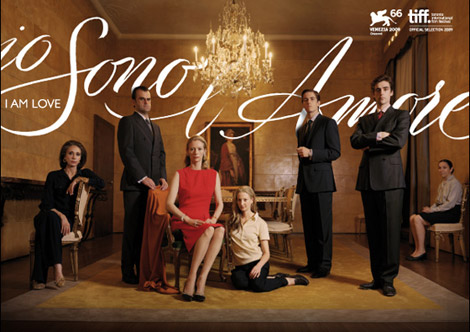
4. I Am Love.

If Vincere was an Italian motion picture delight, then I Am Love is the country's motion picture painting. Like brush strokes on a canvas, my memories of I Am Love tend to think of it in light-reflecting stills: cubism, in the film's intro as a large family sits in a rich mansion around a rectangular dining table with servants and all; freedom in spirals as central character Emma (Tilda Swinton) begins breaking free of the family hierarchy (we even see a spiral in the pinned up hair on the back of her head); and finally a frenzy of kinetic energy, almost like a Pollock but remaining in motion, as trauma breaks in and the family splinters, each left to face their own tough decisions. The acting is voracious, especially in the film's end, and the score, boisterous as it bellows. The Italians brought the power this year with Vincere and I Am Love. These are ferocious films that do not back down.

3. The Secret of Kells.

History and fantasy collide in what might be the most unique animation since The Triplets of Belleville, in 2003. The lush, hand drawn pictures of fanciful fairies and solemn but comical monks make use of interior (behind village walls) and exterior (forest) imagery in finding and brilliantly illuminating the sensuous, spiritual nature of life. The characters are bonded together in a quest to create The Book of Kells, which the film doesn't fully describe, but is very real in its artistic rendering of the four gospels. If you ever have an opportunity to see this on the big screen, don't pass that opportunity by. This is what the big screen was made for. The characters here are so charming and full of life, and the book and the forest personified with their secrets. The creation of a (figuratively) living and breathing book is an idea perfectly suited to this form; the quest for ink is a pulsating delight.

2. Forbidden Fruit.

This is a somewhat restrained coming of age story centered on Finland's Laestadian (Lutheran) sect, a faith-based community of Biblical literalism, and 18 year-old Maria, now old enough to decide for herself whether she'll remain in the community she grew up in or move to the city to live. While she's been taught to believe in the God-based, family values at the heart of the communal focus, a move to the city represents temptations from the "Arch Fiend," in boyfriends, drinking and dancing. Maria's friend is sent to track her down and guide her through this transitional phase, and most of all to call her to her roots, to urge her to come back home, to give up the city and its allure. But the film explores more than just themes of body/spirit or country/city temptations. The idea is that a friend will follow you anywhere, even to the heart of a strange city you can't possibly know how to deal with -- that your friend is one who will struggle with you, that she'll aid you in the hard times -- and that quite possibly the two of you will both change in unexpected ways because of what you've been through together. The strict religious ideals and how the two girls learn of its value make this an easy pick for my Top 10 this year. It's a heartwarming tale, but ends on a note that is... well, it's complicated. But I've a feeling that no matter what approach the two girls take to daily living, they won't be separated from a faith that is more resilient than anyone thought. This is a beautiful, quiet, carefully crafted film, rich with longing, friendship and spirituality. I honestly can't wait to see it again.

1. The King's Speech.

Rarely does a film overwhelm me like The King's Speech did. I guess I'm topping my list with pure emotion, because this one easily brought the most emotional response from me this year. Yes, I wept like a blubbering little baby -- snotty nose, tissue in hand, et al.
I couldn't help it, though -- the film is a friendship driven, heart-warming story about overcoming obstacles and getting the help you need in the process. It almost has "Viewer's Cry" built into the script. With perfect, genius performances from the most talented cast of the King (Colin Firth), the Queen (Helena Bonham Carter) and the Commoner (Geoffrey Rush), I'll be rooting for The King's Speech today when the Oscar noms are announced, and I hope to be rooting for it in late February as well. It's quite easily my favorite film pick of the year, and I'm thinking that even objectively it might be one of the best. Everything about this story and the way it is handled and told is superb -- it just doesn't get any better.

And Here Are Some Apologies...

Apologies to a comedy that made my sides split (A Film With Me In It), a tranquil psuedo-doc of three generations fishing in the warmth of the blue-green ocean (Alamar), and apologies to two trilogies, both of which I'm certain I'll return to, likely more than once each: The Millennium Trilogy (The Girl With the Dragon Tattoo, The Girl Who Played With Fire, and The Girl Who Kicked the Hornet's Nest), and Red Riding Trilogy (1974, 1980, and 1983). Each of these as a whole (but particularly Red Riding) rival the films on my list above; however, I'm unconvinced a given film in either trilogy stands up to the list on its own.

Other apologies: 35 rhums and The White Ribbon. I've come to accept that you were 2009 releases -- otherwise you'd probably make the list.

Forgive me, too: Shutter Island, Catfish, Only When I Dance, and The Wind Journeys: You are all very good in your own right, each one of you better than an average weekend trip to the movie house, but not strong enough for an entry into the ten. I love you, but, sorry.

AND HERE is a special paragraph dedicated to a film I saw and hated, one that I wish I could come to terms with all the lavishing of love, a critics' delight. It is the most regretful of my 2010 non-admissions because its director is one of the most respected in the history of cinema. The film is Wild Grass, and it bugs me to no end that I can't connect with it. But I don't. I found sitting through it to be an excruciating, almost unbearable experience. Still, I'm swearing on oath right here and right now to see it again sometime this year; perhaps this regret will turn into redemption.

WHAT I HAVEN'T SEEN: Animal Kingdom; Carlos; Eccentricities of a Blonde-haired Girl; The Kids Are All Right; White Material; Secret Sunshine; Temple Grandin; Another Year; Stone; Blue Valentine; Get Low; Never Let Me Go; Rabbit Hole; Somewhere; Please Give; Of Gods and Men; The Tempest; Nowhere Boy; Jack Goes Boating; Buried; Devil; Enter the Void; Cairo Time; Ondine; My Son, My Son, What Have Ye Done; A Woman, A Gun and a Noodle shop; The Good, The Bad, The Weird; Four Lions; Double Take; L'illusionniste; Last Train Home; Marwencol; Boxing Gym; Wasteland; Lebanon; Cave of Forgotten Dreams; and 45365, which I have a vested interest in -- I lived in this zip code for over three years.

(Edited to strike out films as I go.)

The list of what I haven't seen is telling in that it's virtually impossible to make an objective Top Ten. When one makes a list like this, it always has to be a list of their own personal faves -- nothing more, nothing less. No matter how many films you've seen, there are hundreds you missed, especially if you're like me and choose to view globally as much as locally.

Top Five English Language Films
... (that Didn't Make My Top Ten)

5. Exit Through The Gift Shop. This is an art-inclined prankumentary that I just love blathering on about. Like F For Fake, Welles's art fraud concoction from the seventies, you don't always know whether the joke is on you or even if a real joke is being played. (Obviously, this is Banksy, and mischief abounds in bundles.) I had a riot laughing at the preposterousness of this "documentary". There's a constant wry smile hidden somewhere if you look.

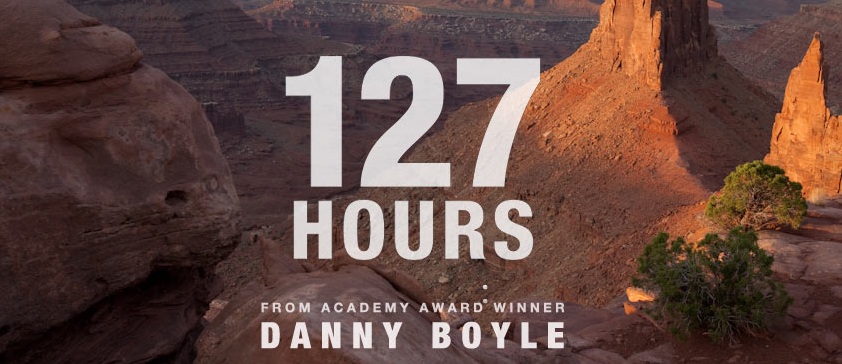
4. 127 Hours. Oscar winning director Danny Boyle uses his signature devices of frenetic editing, split screens, and nightmare sequences of a character isolated in a rocky Utah crevice, his arm trapped under a rock. The film is worth seeing for the first ten minutes alone, in which the tone of an adrenaline junkie is captured perfectly, and Free Blood's electronic "Never Hear Surf Music Again" cracks off the best opening moments in a film in 2010. It's a survival movie at heart, though, with a feel-good ending and a character that has learned a tough life's lesson.

3. Black Swan. Anyone who knows me or has previously visited Filmsweep knows of my love for Darren Aronofsky. I love his independent, get it done spirit, his twisted energy for the form, and how he confounds the eye and mind with imagery. In that respect, Black Swan is no different from other Aronofsky films like Pi or Requiem For a Dream. These are fever dream films where characters are soaked in trauma, but without Aronofsky's flight-like mise en scène here, or his blistering, rapid eye montage in general, his stories would never come across as gut wrenching as they do. Black Swan easily wins an Oscar this year for Best Cinematography, and expect Natalie Portman to get nominated for leading lady in the role of a ballerina on the brink of artistic destruction. I'm also leaning toward expecting her to win.

2. The Ghost Writer. This is simply a great political thriller, with Ewan McGregor and Pierce Brosnan in subdued roles at their acting best. I've gone back to it more than once already this year. It rather reminds me of the old Jack Ryan films with Harrison Ford. It's got a noir-type conspiracy feel, a surprise that comes out of left field, and a killer ending which leaves behind one of the most perfect final visuals in a film this year, and in terms of triumphant narrative (read: linear) stories, it might be the best in the lot.

1. Inception. Well, my mind is still scrambling over Inception, and that's a good thing -- I think. When I first saw it in the theater, it may have been too much to take in. It's screaming, furious visuals accompanied by a story that takes place in dreams -- and dreams within dreams, and dreams within dreams within dreams -- is a mind job, like an original viewing of The Matrix years ago. This ranks not only as one of the best of the year, but as a guilty pleasure I know I'll go back to many times (in fact I already have). I think of it like a Bourne film -- I love watching it develop and trying to put all the right parts in their place, but as with memory there, dreams here can be a little discombobulating. And that's the fun of it.


And Finally... To Wrap Things Up...

FAVORITE NON-2010 DISCOVERIES
(I fell in love with in 2010):

The Song of Bernadette; The Secret of the Grain; Stalker; Stroszek; Tender Mercies; Make Way For Tomorrow; Fraulein; Battle in Heaven; Come and See; The Virgin Spring; Nénette et Boni; Trouble Every Day; The Song of Sparrows; The Willow Tree; Seven Pounds; Brick; Ink; Lars and the Real Girl... and a wealth of films by Pedro Almodóvar, the greatest being Talk To Her, Volver, and Broken Embraces.

For me, 2010 was a stellar year for a film buff.

Next year I vow to see more films. :)

Saturday, January 22, 2011

Winnebago Man. (2010) Ben Steinbauer

Roger Ebert was right in adding this to his Top Ten Docs of 2010 --
if anything, just to give it more exposure. I wouldn't have seen it otherwise.

While it's nowhere deep enough to include in one of my "Non-lollipop Docs" columns, it is worth seeing, and here's why: It works great as an exposé on anger, or how anger is perceived in a media saturated culture. Watching an old guy curse to the core like the scene we often remember in Planes, Trains & Automobiles is sad and funny at the same time, however, I don't understand the celebration of it at the end of Winnebago Man. Do we really want people to be angry so we can laugh? Do we want them wound up, giving us a hearty guffaw, while not even identifying the anger's source or thinking that words like this might not be healthy for the communal spirit? If you're really that much of a cynic, if you're so jaded you don't see a problem with this, I feel sorry for you. Really, I do.

That is not to say I didn't laugh in places, because I laughed quite hard. But I feel a tad guilty about this kind of laughter, and guilt in this case is justified and OK.

Winnebago Man is an excellent doc. No doubt about it. But there's nothing dug into here, no real heart at its core. In fact, no core; just a hundred or a thousand F-Bombs, with no explanation about the black hole where they come from. To see it and laugh and walk away and not think it through is to live a rather shallow and deluded existence. The film is a great example of a larger cultural problem with the way we choose to laugh when given too much distance due to video; the things we laugh at without knowing anything of the pain in the background. (And not caring about it.)

We're losing our ability to fully think these things through.

Wednesday, January 19, 2011

Illégal. (2010) Olivier Masset-Depasse


The illegal immigrant is a controversial subject no matter the country in question. Illégal puts us in the shoes of a woman hiding and then captured, and then on the run. The story, experienced through her eyes, will be touching even to those who typically have no sympathy for her status.

Russian immigrant Tania came to Belgium with her son, Ivan, when he was a child, through a contact in the Russian mafia. On Ivan's fourteenth birthday mom plans a surprise party for him but it's disrupted on their way home by a routine police check on the street. In the face of her illegal status, Tania panics and is arrested; Ivan, in tears, runs away. The police follow protocol and place her in a detention center for women. She'll be held there until they figure out her true citizenship -- who she is and where she belongs and how to fly her back "home."

She refuses to give any personal information out of fear that Ivan may be captured, too. After endless interrogation she coughs up a name and country, neither of which belongs to her. A friend's name is chosen instead, and a country from which she can ask for asylum. Not knowing her friend's full immigration history backfires, and Tania is left facing a much quicker deportation to a country she knows nothing about.

As she waits for deportation at the center, a pay phone is her only connection to the outside world. Through phone conversations with Ivan, she fears he'll be forced into working for the Russians, who are bearing down hard on the outside. It's an impossible situation. Not wanting the boy abandoned, and not wanting him working for the Russians, she believes escape from the center is the only right solution.

She spends much of her time in isolation mapping out ways to pull it off. She meets those who have tried to escape and failed, and seeing the bumps and bruises upon their return keeps her attention on the timing, and whether escape is even an option.

One thing that separates Illégal from other immigrant films like Dirty Pretty Things or Lorna's Silence is that the bulk of the film is shot from inside detention. It riffs on that real-life, hand-held Dardennes style, which is perfect for the tight, claustrophobic setting of the center. We sense the hopelessness detainees face in their shared bedrooms and locked up windows, in pale walls that surround them like they'll soon cave in. These enclosed, stifling spaces of hardship make it all the more satisfying when Tania perseveres.

With a stern, serious performance by Anne Coesens, Tania's character is broken and probably confused (but barely showing it). She's running out of options and pitted against time -- the time of her deportation, which is separation from her son.

When one of the guards who has been friendly to her plight finally asks Tania if what she's going through is worth it -- whether going home would really be that bad after all -- Tania's firm reply is deadly resolute: "What do you think? That we're masochists? What do you want to know? Want to know if I've suffered enough to stay in your country?"

I've run into plenty of Americans who want to run the illegals out with a shotgun aimed at their back. I've run into a few who might shoot before the runner hits the border. I'd like to see their reaction to Illégal, where you're given a face for the faceless, a name for the nameless. We're willing to think globally when it benefits us or our economy -- are there other times it might be right to do the same?

Winner of the SACD Prize at the 2010 Cannes Director's Fortnight, Illégal sheds light on something we seldom see, that of the captured squatter with no home willing to go to any length to create one.

Sunday, January 16, 2011

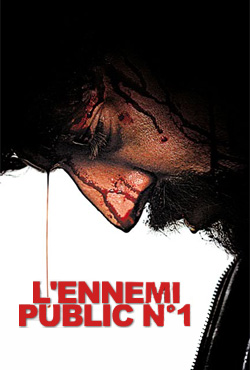
Mesrine: Public Enemy No.1. (2009)
Jean-François Richet


Mesrine: Public Enemy No. 1 is the second of two films that make up Richet's version of the story of Jacques Mesrine: a gangster, a thief, a kidnapper and a killer. My reaction to Mesrine: Killer Instinct is found Here.

In the first film it was understood that what we were seeing was based on Mesrine's autobiography, an account of his life he later disavowed, claiming he was a hero on the street and that it kept people entertained. Now I'm not so sure how much of his side was a lie, if anything at all.

Public Enemy No. 1 differs from the first film in that it has a lot more action but is a bit less interesting. Whereas earlier we were introduced to the character and trying to keep up with his mind and instincts, we're now keeping up with his continuing downward spiral, and when he lays out his reasons for the "Why," we can see right through all the bullshit. Twice when cornered, once physically by the police and once in an emotional appeal for his own righteousness, he tries to pass himself off as part of the RAF, the Baader-Meinhof gang. This was especially interesting insight for me, having watched The Baader Meinhof Complex between my screenings of the Mesrine films. (And, wow -- were the 70s really that volatile a time in Europe? I had no idea. I was born just a month before the Baader-Meinhof partnership launched.)

As in the first film, there's not a whole lot here to talk about in terms of plot. Mesrine has friends and foes; he works with different accomplices and girlfriends. He robs banks, kidnaps rich men, avoids the police, gets arrested, and of course as a prisoner, his raison d'être -- he lives to break out of jail. Over the course of his criminal career, he broke out four times, the last of which being the first time anyone escaped from the maximum security of La Santé Prison, before that thought an inescapable facility.

So the second film plays more like a typical gangster/prison film with Mesrine breaking out or on the run for a good portion of it.

From the intoxicating intro in Mesrine: Killer Instinct, we already know Mesrine's fate (he's gonna get kilt, and bad), and thus we already know the ending of this film, too -- but we're taken through the scene one last time as it neatly bookends the films together. This time it plays quite differently, though. There is no split screen and no editing tricks, and the story is told from the point of view of The Law. We hear police in walkie-talkie conversation -- they're waiting in ambush, and we see how tense things are even as they wait to jump Mesrine. We sense nervousness and the fear of the cops even as they're armed and outnumber him, maybe twenty armed men to one.

From the tiny bit of research I can do on the web, apparently the ending is true to life. It seems the French authorities had simply had enough of this thug. No more courts, no more prison, no more grand gestures to the press and certainly no more book sales. Mesrine was executed in his car in the middle of the street, shot over and over by at least four or five men with machine guns, a final shot put in his head from close distance to make sure he was dead after being riddled with bullets. I know nothing about French laws or rights, but they seem somewhat like American laws and rights, and this looks about as horrible as something like the U.S. atrocities in Waco. Every country has that dark stain, I guess. Even for grounded institutions, justice and vengeance are a fine line to tread. The problem here is all that political bullshit I described Mesrine spreading before probably became more palatable after his country decided that rather than putting him through the system once again, it was easier just to gun him down. I wonder if that lead to greater chaos, even if they thought gunning him down might bring about more peace.

Sometimes there's infinite ugliness wherever you look. The end of Jacques Mesrine, the life and the film, is a pretty good example of this.

Friday, January 14, 2011

Mesrine: Killer Instinct. (2009)
Jean-François Richet


Now here's an interesting pair of films.

Mesrine: Killer Instinct, reviewed here, is the first of two, which together make up the full story. Tomorrow I'll see Mesrine: Public Enemy No. 1, and I'll post a reaction shortly after.

As I understand it, Mesrine: Killer Instinct (but not Mesrine: Public Enemy No.1) is based on L'instinct de mort, the autobiography of Jacques Mesrine, written when the gangster/bank robber/kidnapper/killer was brought to justice after years of civil terrorism, finally captured and imprisoned in maximum security. Seen as such, the story is sold from Mesrine's memories, some of which are factual, but a few of which should be understood as personal literary license. He likes to take the historical outline and enhance it with myth, as if the truth of what he did wasn't corrupt enough in itself.

There's even a caption from the start which warns us of the "complexities" here; that it is grounded in reality but with elements of fable mixed in. Even in jail, Mesrine upgrades the mystery of his life, blending true history into His Story.

I haven't read the autobiography, but from what I've seen in the the film, Mesrine was a narcissist sociopath who took pride in his work -- especially in front of the press, which in the latter days of his career he saw quite often.

In his early days in the sixties, he tried to go straight, pull out -- he tried to get a job and get out from under mob mentality. These moments happened when he thought of his family, his kids, but at least once we clearly see he's just sick of being so vile.

The desire to drop the lifestyle doesn't last very long, however, which leads us to question whether he is intrinsically evil or just addicted to the rush and the money. He pulls off heist after heist, wanted on both sides of the Atlantic for a trail of blood and money, his fame growing nearly as fast as his head.

Mesrine is played by Vincent Cassel, most recently brought to U.S. attention as the driven, somewhat demented ballet director in Black Swan. Cassel is always best in these over-the-top roles where guns are a-firing and trails are a-blazing. From the ex-con with a new plan in Read My Lips to the driven insane boyfriend in Irréversible, from the diabolical grin of a devilish goat-herder in Sheitan to the menacing mobster-son of Eastern Promises, Cassel functions best when embodying characters oozing with excessive moral decay. (On the flip side, his worst role might have been playing a rather subdued cannibal in Claire Denis's Trouble Every Day, which is still an interesting film regardless of his mostly unconvincing performance.)

The plot is secondary to the sociopath character, so I'm not going to dwell much on that. Think Goodfellas, Donnie Brasco or Public Enemies and you're very much in the right ballpark.

Though it's out on DVD in just a few weeks, I'm glad I caught the film in the theater. Cassel fills a screen with fury no matter how big the screen happens to be. He's larger than life here, in what may be his greatest performance -- this might be the one to remember him by. There's no American equivalent to Cassel, ever, but I'm glad I thought to mention Donnie Brasco and Public Enemies. Johnny Depp, though still too pretty to compare, is like a blood brother to Cassel in filling a multitude of roles. They might be the most mainstream actors in film who revel and relish in the most beguiling of cinematic opportunity.

The film, especially during an incredibly cool opening over the credits, makes use of a kind of split screen that, if I've seen something like it before, it's certainly been a long time. We see the same actions from several angles juxtaposed on the big screen. But as we watch more closely we come to realize that the actions actually aren't quite the same. Sure, the scenes have the same actors, and they're doing the same things, but the director chose to film the same scenes over and over again, never using the same take twice. It makes for a mesmerizing viewing experience, and rather thwarts time and dimension, thinking of Mesrine's choices ahead and the choices he's obviously already made. It was as dizzying and splintering as an opening credits can be, and though the rest of the film contains some intense, direct brutality, it rather riffs as a whole on these opening split moments.

Dizzying and splintering are good descriptors for Mesrine: Killer Instinct. We'll see how it wraps up tomorrow.

Thursday, January 13, 2011

Cyrus. (2010) Jay Duplass and Mark Duplass

It's not often that I'm completely thrown off by a movie. I usually like it or I don't, and I understand why I do or don't like it. Sometimes I walk away from a story knowing that I personally don't like it, but I can see why someone can. It's that subjective vs. objective distance that I'm trying to maintain, if only to understand what's going on in someone else's brain.

With Cyrus, it's my own brain I'm trying to figure out.

I'm a little befuddled over Cyrus. I'm dangling my feet on both sides of the fence. But the film, I feel, dangles its feet a little bit, too.

The film stars John C. Reilly as awkward nice-guy John, an aging washed out editor still in shambles from a divorce seven years ago. He says the divorce wasn't his choice, it was added to his life unwanted, though he does admit he was in some kind of a slump which his wife didn't want much to do with. His ex (Catherine Keener) remains his best friend, but now -- uh oh -- she's planning to remarry.

Her plans disrupt John's life and send him into an emotional chaos, not that he wasn't in a bit of chaos already (he claims he's been in a "tailspin" for some time). To make up for the bad news, she drags him out to a party where he takes her advice to finally move on, hitting on a few pretty ladies. Socially awkward, having not had a relationship in years, he tries to fumble into something new. The thinking is that someone else can make us whole, someone else can make us better -- someone else can heal us when we can't figure out healing on our own.

At one point he's told by one of the ladies, pointing out the friend she's talking to, "We're kind of having a conversation here."

"Yeah," John says. "I'm going to have some conversations, too, here, eventually..."

John drinks too much at the party but somehow jump starts the dance floor. He gets everyone dancing to Human League's "Don't You Want Me," which might also work well as his life's song.

John is tracked down and somehow met by Molly (Marisa Tomei, who would only date this guy in the movies) while urinating in the bushes outside. They chat, they click, they laugh a little bit, and he ends up bringing her home that night. They cap off the night with what he thinks was amazing sex, but she sneaks out when he falls asleep and leaves a note. It's a pattern she wants to continue the next night, except that John catches her in the act and follows her home, his headlights off behind her as he drives.

Is she married? Does she have a lover to get home to?

No. If you've seen the trailer for the film (and it was everywhere last year), you know that it's all about her son, Cyrus, played by Jonah Hill to perfection by remaining a bit of a mental enigma. Cyrus is twenty-two, still at home, still trying to find his way in life, but having an all-too-close relationship with mom -- one that isn't incestuous but remains clingy, with weird, lingering affections.

The remaining two-thirds of the film are about Cyrus's stealth-like moves in bringing the relationship between John and Molly to an end. He's never honest about his moves or his motives to his mom, who loves him to no end, though he calls her "Molly" and not "Mom". He wouldn't be honest about his desires to John, either, but after a few missteps John sees through Cyrus, and eventually there's the inevitable confrontation. The dialogue here is quite efficient -- they're able to make giant gestures in few words and little time. The tension between them escalates quickly.

It's a peaceful film for a story about tension between people, with an ending which is downright redemptive (now there's an over-used film word, but it certainly applies here), with examples of grace, reconciliation, and even growth. When it's all said and done, one might even describe the story as heartwarming. Maybe.

But I approach my reaction to Cyrus with great reservation. The characters are just strong enough to move the plot forward, but they carry at all times a shallow core -- not the fault of the characters but the fault of a script that won't bring more dimensions to their portrayal. They're simply not developed enough to make us dig in and give our hearts to it.

In a way, the characters remind me of Greenberg, a film I hated. In that film the character development was just enough to make you realize how much you couldn't stand its title character or his actions. But while it reminded me of that loathsome film, I admit I had stronger sympathetic feelings for each of the characters in Cyrus. Think of it as Greenberg-lite, with a touch of empathy. The characters in Cyrus, however underdeveloped they are, are still much more likeable than any of the folks in Greenberg. (Especially Ben Stiller, who made me cringe.)

It also feels a bit like The Squid and the Whale, which I almost hate as much as Greenberg but will go to bat for Jesse Eisenberg every time. He transcends a film that makes us not want to like it, bringing an intelligent performance almost as smart there as John is nice in Cyrus.

But then there's the cinematography, too, which makes heavy use of a hard zoom as if centered on Jim in "The Office". It wouldn't have been so bad had it not been used every seventeen seconds. It really feels like whiplash after a while, a hard zoom on John as he mulls over the actions of Cyrus, a hard zoom on Cyrus as he carefully plans his next step. The camera is trying way too hard in this film. It's trying so hard that it is noticeable, and it takes us out of the story from time to time.

So I'm stuck in terms of how I actually feel about Cyrus. I like what the mumblecore Duplass brothers are trying to do with the story, but I don't think they accomplished everything they set out for, and there are several distractions in the camera work and characters left unfleshed that there's a hollow ring at the core of what might otherwise be a wonderful story -- one about forgiveness, and overcoming the nastier side of handling uneasy relationships.

Is it possible to like the content of a film, but simply not the way it was delivered? That might be my strongest, most sure reaction to Cyrus.

I guess I'm figuring out my brain as I go.

Monday, January 10, 2011

Non-lollipop Docs.

Last week I wrote about five films currently playing that are worth checking out. At the week's end, I also found out that each of those made their way to the Producers Guild, a list which most likely paves the way for them to be Oscar nominated, still being determined and announced January 25.

While I enjoyed the mainstream offerings, I've also had a chance to see six of the fifteen eligible Oscar documentary finalists. Five of those fifteen will make their way to being nominated. And I've gotta say -- the few I've seen so far I've found utterly jaw-dropping, particularly the first two listed below, which scratch at different subjects but raise similar questions on the safety of government deregulation, and about the faceless, gigantic, out-of-control corporations encroaching on honest citizens:

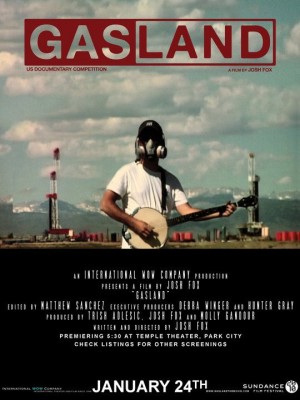
Gasland. (2010) Josh Fox

Director Josh Fox, in first person narration, approaches the film not as a known documentarian, but as a concerned Pennsylvania resident with a house on a stream off the Delaware River. He's received a letter in the mail which could easily give him close to $100,000. All he's got to do is let America's natural gas industries begin drilling on his nineteen acres of land.

Hydraulic fracturing, or fracking, is the process by which this drilling is done, blasting a mix of water and some 596 mostly unknown chemicals 8,000 feet into the ground, cracking into layers of earth like a mini-earthquake. Using millions of gallons of water per well, 50,000 gas wells have been planned within a few hundred miles of Fox's home, and hundreds of complaints about residents' contaminated well water have been reported since the fracking began.

The threat to underground drinking water goes largely without notice due to a 2005 energy bill pushed through congress by Dick Cheney, which exempts the oil and natural gas industries from the Safe Drinking Water Act, the Clean Air Act, the Clean Water act and quite a few other acts. Companies like EnCana, Williams, Cabot Oil and Gas Corporation and Chesapeake presently use the fracking technology of Halliburton in 34 states. With his banjo and gas mask on a road trip across the US, Fox finds contaminated drinking water and toxic waste fumes in all these parts of the country, resulting in serious health issues for residents everywhere: headaches, ringing in the ears, disorientation and dizziness, swelling throughout the body, and in more severe cases irreversible brain damage.

I was throttled by quite a few scenes of people lighting their own tap water on fire in this film. That they can take a lighter, turn on their tap, hold the lighter to the running water and witness a minor explosion in their kitchen sink, with zero recognition from gas companies after numerous civilian complaints, is a visual more incriminating than any load of papers full of facts. We often hear that, "The book was better than the movie," but when we're lighting our streams or sinks on fire, when gas wells explode and condensates go fully ablaze, visuals can be ever so convincing.

This is an exploration of modern energy and companies that either struggle with or abuse the process of obtaining it, much the same way that Crude and Crude Impact brought to light our problems with oil, and Burning The Future: Coal In America did with electricity. Fox's film is informative, at times humorous, and in moments deathly serious. But most of all it is a wake up call to the unchecked crimes for which the government simply turns a blind eye.

Inside Job. (2010) Charles Ferguson

Speaking of the government turning a blind eye, here's the most recent investigative work from Charles Ferguson, who brought us the excellent No End In Sight a few years ago. Once again he takes a known story and plummets down the rabbit hole looking for greater depth, finding those on the scene of the crime willing to sit down and share their views, a few with serious reservation and at least one who asks to turn the cameras off.

Inside Job is the story of the financial meltdown of the fall of 2008, the fact that it was preventable but unavoidable due to the nature (read: greed) of those who let it happen. Further meltdowns remain unavoidable because change does not come easy where the political and the monetary flaunt smiles and shake hands -- and no matter what side rules in the two-party system (both sides take the blame in this doc), no one enforces laws already on the books and everyone considers regulation like it's the Antichrist.

The doc travels at warp speed in relaying all of its economic info but gives us plenty of definitions with graphs and visuals to keep up. There is a bottom line here, understandable to anyone who walks into Inside Job. It is this: you were raped, America, and economic tyrants will continue to molest you because they're not held accountable; they walk away scot-free. That may sound harsh if you haven't seen the film, but after you see it you may want to reserve a special place in hell for the shiny white-teethed Wall Street types you've just spent time with.

We don't often think of how the meltdown affected more than the U.S., but the entire world was hit hard by the actions of a few well greased banks with predatory lenders. Whereas Enron was an American thing that effected American people, for the most part, Inside Job shows the same mentality as that of Enron, but multiplied at a global level. As if it isn't bad enough that thousands (millions?) lost their homes due to profiteering, the ramifications of the wrong done here will affect the world's nations for years to come.

Last September, my friend Ken Morefield caught Inside Job in Toronto. He wrote a sort of pro and con review of the film, eloquent as he always is, Here.

The Oath. (2010) Laura Poitras

Why do young men of the middle east sign up for al-Qaeda? What is the thinking that goes on there? Laura Poitras's The Oath tackles this question by describing events from two men's recent history. One was a bodyguard for Osama bin Laden; his brother-in-law, bin Laden's driver. The driver, who claims no ties to al-Qaeda other than driving a car for the wealthy terrorist, is caught and turned over to Guantanamo Bay before his military trial years later; the brother-in-law bodyguard is caught and questioned but ultimately let go. It is this man, Abu Jandal, that the documentary revolves around, from direct questioning from the unfliching Poitras to his rather conflicted interviews on Al Jazeera TV.

Jandal seems to know when the cameras are on, and which side has them on and what he thinks he needs to say. He uses his understanding of the endless angles of media, but acts like a spy that's been burnt. He's clearly scared of both sides now, at one point asking Poitras to turn the cameras off in fear that the arabs might see this documentary, but it seems he also hopes that the simple knowledge of his existence -- either side's camera still being on -- might save him.

I'm torn on this one. I feel strongly that my country has become an empire set out to rule the world, be it through the military or corporations and competition (the latter of which happens as much inside the borders as it does out). We never seem to deal fairly unless we're fairly dominant. Still, I will not and cannot support a thought process that leads to terrorism of a country's citizens, much as this particular film helps you understand the mindset that gets these kids there.

I've started a thread for The Oath, complete with a trailer in the first post Here. Should be interesting to see where it goes.


Waiting For Superman. (2010) Davis Guggenheim

Here's the one that tugged at the strings of my heart. I'd be lying if I said I didn't shed a tear or two. There's a lottery that takes place near the film's end that is just... devastating. This is a killer in-depth documentary on the climate of today's school system, teacher's unions, tenure, and student life in general. It is loaded with graphs and pie charts and numbers and stats. It's also loaded with five kids and their lives, and you fall in love with them and root as they push to better their situations.

I'm going to simply link to the Ebert review here. He's the pro, and he's got some great words on Waiting For Superman.

If you teach, or work with kids, or work in the inner city or in a school, or if you have any desire to learn more about an American school system you might no longer recognize, Waiting For Superman is the perfect film for you to see.

Saturday, January 8, 2011

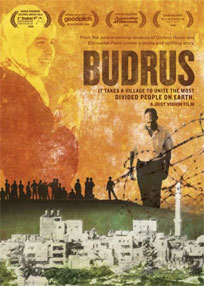
Budrus. (2010) Julia Bacha

Budrus is a small Palestinian town with a population of 1500 just a few miles east of the West Bank Barrier. Generations of men, women and children have made a meager living there planting and growing vast lands of fertile olive trees. They are obviously connected to the land economically, but the trees take on a deeper meaning in the social and spiritual ways the people relate through them, in relationships built on sustaining the crops; they're hard-working farmers that will only benefit relationally as they trust the work to one another and reap the land. Olives and its oil are their life, their livelihood, their connection to the ground and to each other. To threaten the trees or take the land would bring ruin to the bulk of these families.

In 2004, the Israel army, apparently in need of better security, was instructed to put up a wall, or, rather a fence, that would cut through the Budrus fields, wiping out many miles of land and thousands of trees. The feeling of threat to the townspeople's livelihood was only topped by the feeling that this policy was a stench. The boundaries were drawn in 1967. This has been their land, with their trees since that time. Why, then, is the fence being built far east of the barrier, cutting through their lands, their homes and even their cemeteries, and in plain sight only forty meters from the back of an elementary school?

What happens next isn't so amazing, but the way it happens is. We're used to seeing all kinds of protests and violence and arrests in this part of the world. We're used to seeing news clips of civilians clashing with the army, both sides at times looking perhaps a little crazed. So when the mayor of Budrus, Ayed Morrar, begins gathering folks together, your gut already tells you what direction this is headed. The difference here, and what catapults the next action to a higher plane, is the notion that the answer to their problems may be found only in peace. Fighting hasn't helped any of the other small towns that have previously dealt with this. Morrar decides that the only way to combat the army is by remaining unarmed, lining the streets and peacefully protesting, eventually inviting the village's women and children to do the same (quite a rare act in this culture). Even Israeli protesters from the other side of the wall, and people from around the world get involved -- South Africans that were anti-apartheid, Swedes that make the trek to stand with the persecuted. Many tribes, many people represent the land's cause -- and local news and the global media notice.

The peaceful protesting actually went on for nearly a year, and the film puts you right in the middle of the streets as a witness to this clashing. The army doesn't know what to do with the peaceniks, who are reminiscent of hippies protesting 'Nam in the sixties. We see the resistance clashing with an army protecting bulldozers, Israelis uprooting trees and planting barbed wire fences, the protesters tearing down fences and sticking trees back in the ground at night. Sometimes the army incites the resistance into throwing stones, which is obviously no longer peaceful -- which now brands the families as terrorists, so the soldiers can shoot gas, rubber and eventually real bullets. Many trips to the hospital are taken, and some of the protesters detained. (At least one on record was put in prison for many months with no trial.)

The results from peaceful protesting are at least good enough for this film to take a road tour to other Palestinian towns dealing with the very same issue. After years of seeing the two sides in conflict and never seeing good results in peace talks, a documentary like this is a such a fresh wonder to the spirit. It brings hope that maybe some day there might be peace between Israel and Palestine, but it'll take more blood, sweat and tears to get there. It might also take a few more deaths, those willing to lay down their lives for peace. But when sides are willing to make their ideas known, without resorting to bombs or killing each other's children, both camps, at least as represented here, are eventually willing to listen -- which is amazing. Who would have known this was possible?

Hats off to the peaceniks of Budrus, to filmmaker Julia Bacha and the film crew that captured these nervous events. I'd really like to see more films like this coming from this part of the world.

Wednesday, January 5, 2011

Now Playing.

Having made no Filmsweep posts during this year's nutter butter holiday season, but having made it out to the movies quite a bit (with family and flying solo), I want to share about the films I'm most excited about as the year wraps up, movies that, if still playing and you have yet to see them you should definitely check out when you can. We'll hear even more about a few of these in the upcoming Oscar weeks.

I'll list my absolute favorite first:

The Kings Speech. (2010) Tom Hooper

This story had me in tears from beginning to end. No other 2010 film has gotten under my skin like this. Can a film about a royal who can't get out of stuttering mode really be all that great? Honestly, the story -- the script -- is incredibly rich, establishing a relationship between King and commoner that is pure gold to take in, and the performances by Colin Firth and Geoffrey Rush, which bring that story to life, are among the finest performances I've seen this year. If life is fair at Oscar time, this film will give The Social Network a run for its money; I would love to see Colin Firth wrap up the Big Win for Best Actor. The final speech is... devastating... What. a. Film!

The Fighter. (2010) David O. Russell

Sick of boxing movies? I can't say I blame you. The seventeen Rocky films have made us leery of even a decent film like Cinderella Man. And although The Fighter has that common boxing movie ending, the heart of the film is about so much more. A family trauma is really at the core of this story, mixed in with Christian Bale's struggling crack addict character, the older neighborhood champ-brother of our story's boxing hero (Mark Wahlberg). Excellent performances are graced from the entire cast, but look for Amy Adams in the upcoming nominations. Her supporting actress role is the glue that holds this family, and The Fighter, together.

127 Hours. (2010)  Danny Boyle

Have you heard about 127 Hours? It's that one about the rock climber who gets trapped under a rock for days and rips his arm off to escape his own death? Well then, you pretty much know the story. You might think, as I did: How can a simple plot like that translate into a 94 minute film? The answer is Oscar winning director Danny Boyle. His frenetic editing, his use of split screens, his fun vision for the nightmarish sequences of James Franco's character, isolated in a rocky Utah crevice, turn this simple tale of a captured climber into one man's psychological descent into longing and madness. The opening shots scattered over Free Blood's electro sounding "Never Hear Surf Music Again" are among the best opening moments in a film in 2010, and they launch the 94 minutes into fly by mode. Seriously, I felt that if I sneezed, the film would have been done... I have a question, though: James Franco has been announced to host the Oscars this year -- how is that going to work if he also receives a nomination?

Black Swan. (2010)  Darren Aronofsky

Anyone who knows me or has previously visited Filmsweep knows of my love for Darren Aronofsky. I love his independent, get it done spirit, his twisted energy for the form, and how he confounds the eye and mind with imagery. In that respect, Black Swan is no different from other Aronofsky films like Pi or Requiem For a Dream. These are fever dream films where characters are soaked in trauma, but without Aronofsky's flight-like mise en scène here, or his blistering, rapid eye montage in general, his stories would never come across as gut wrenching as they do. Black Swan easily wins this year for Best Cinematography, and expect Natalie Portman to get nominated for leading lady in the role of a ballerina on the brink of artistic destruction. I'm also leaning toward expecting her to win.

True Grit. (2010)  Ethan and Joel Coen

There's some witty, fun dialogue in this reshuffling of the old John Wayne western, and Jeff Bridges and Matt Damon never cease to amaze -- I have a huge guilty pleasure in all the Bourne films, and Jeff Bridges -- well he's Jeff Bridges! (Last year's Crazy Heart rocked as much as "The Dude".) However, it's Hailee Steinfeld as Mattie Ross that steals the show in True Grit. She plays a resolute, overly mature fourteen year-old gearing up to hire out Bridges (here, "The Duke") to avenge her father's murder. Her determined scenes and the lengths she goes to are some of the strongest displays of feminine power onscreen this year... While it's my least favorite of the films in this lot, it's still excellent in many ways. The final month of 2010 brought us some great works to choose from; if you're looking for a western, True Grit will certainly fill that bill, but I look to quite a few previous works from the Coens, which is where their best stuff remains.

I'll be posting my Top 10 of 2010 on January 25, the same day the Oscar noms are announced. As my list typically contains many foreign films, I'll also be listing my five favorite US films that didn't make the Top 10. It should be interesting to see how my lists differ from the films that are nominated, but this is one of my favorite times every year -- like any other film aficionado, I love seeing and making these little lists!