Monday, January 28, 2013

Non-lollipop Docs.

A few years back, I posted more frequently about the so-called, "Non-lollipop Docs" -- that is, documentaries which aren't just for suckers, and which give you some real-life meat to chew on. Here are a few I caught in 2012 on the big screen. In a few days, I'll also post about several I bumped into last year on DVD.

Searching for Sugar Man. (Malik Bendjelloul)

An easy pick for my doc of the year, this uplifting, stranger-than-fiction story is actually a contender for my favorite movie of 2012 -- doc or not. It's the kind of beautiful story the world needs to see, and the fact that this is reality makes it all the more stunning to take in. The story follows an investigation into the death of American musician Rodriguez, a non-seller in the early seventies here in the States, with two(-and-a-half) albums to his credit. The fact that his records sold millions as anthemic protest songs for the anti-apartheid movement in South Africa, coupled with the fact that Rodriguez knew nothing about that movement, including the amount of money he should have garnered from royalties there, is unheard of, and unfair-- but it's actually the smaller part of the story... The mass legend surrounding his on-stage suicide (did he light himself on fire on stage? or something even worse?) -- never corroborated -- and the investigation into how and why the musician from Detroit disappeared takes on an intensity of its own. I cannot say more than that, as this story is incredible, and could only happen from a time the Internet did not exist. To spoil what happens in the investigative Searching For Sugar Man feels like a crime to anyone with the desire to see the film. See this with as little info as you can going in, and then buy the soundtrack that's now available, a "Best Of" Rodriguez, featuring songs from his two released LPs. (I still need to track the CD down for myself, but I've had the title song stuck in my head for months.)

Bully. (Lee Hirsch)

As the father of a ten and a seven year-old, I know this is an over-used word, one that makes its way from claims on the schoolyard playground to Internet forums and twenty-minute spots on news shows like "Sixty Minutes" and the like. But the "Bully" is a reality in our culture, kids modeling what they see in their peers and capitalist parents, where only the strong survive -- and the weak (or different), well, we don't have time for them. Bully, then, travels from Mississippi to Oklahoma to Georgia, telling the stories of a few victims of bullying, two of which only in loving memory as they could no longer endure the pain and tragically ended their young lives. The film shows a society of kids who are either too embarrassed or too isolated to bring their problems to adults who might help -- and it shows adults (principals, teachers, parents) who either turn a blind eye or are helpless to figure out a plan of action (mostly the former). While we can empathize with the victims, Bully doesn't go too far beyond that. This is a point and shoot film -- the most it's going to do is pay more attention to a problem we already know about. It's an effective doc for the sympathetic way it relays these kids' stories (quite well, I'll add), but at the end it's no closer to an answer, a way to solve the problem. Regardless, it's an excellent call for an understanding of tolerance and diversity, a call that needs to be heard in our culture's climate, no matter the hearer's age.

The House I Live In. (Eugene Jarecki)

Like he did with American foreign policy in Why We Fight (2005), Eugene Jarecki takes a strong look at a truly American problem -- he investigates and dissects it, personalizes it, and drives home his point with ferocious clarity. The House I Live In differs from Why We Fight in that we are now dealing with a domestic issue -- drugs, the way we enforce our "war on drugs," and the crushing effect of old-school law on already impoverished neighborhoods and black culture in general. The flow of power from an outdated and unstoppable system (the "Powers That Be") is again Jarecki's target on display. The tagline for the film reads: "In the past forty years, the war on drugs has accounted for 45 million arrests,  made America the world's largest jailer, and destroyed impoverished communities." Jarecki begins with a personal story, that of his nanny's son, a life lost to this so-called war. He then broadens his scope to street cops, politicians, talking heads, and the marginalized many caught in middle of this system. Sometimes all it takes to be "caught in the system" is to be born on the wrong side of town. All interviewees express disillusionment at the laws and the many in jail -- all express anger at the target on the back of inner-city youth -- all seem to understand that the last forty years have turned a "moral" idea to a money making government machine now totally out of control. The only problem I have with The House I Live In is that while there are great examples on display, I learned very little while watching the film. Like most, I've already come to the conclusions the doc reached. ("Hey, I get it. I'm already there.This is more about a war on racism and poverty than it is about narcotics, or anything else.") But it's a powerful film simply for archiving this moment in the war's history -- a moment which represents the cry of an oppressed people looking for better answers than just another blind arrest, or a gangland death, or a trite little phrase like, "Just Say No."

The Flat. (Arnon Goldfinger)

There have been extremely positive reviews floating around the Internet regarding The Flat -- Ebert giving it three-and-a-half stars, and the film's own poster carrying a quote from Michael Moore, describing it as, "One of the best movies of the year." This tiny production from Israel, shot with what looks like a cheap, hand-held digital camera, has also won numerous awards -- and with a subject matter like this, I guess I can understand that. Documentarian Goldfinger begins the process of clearing out a flat which belonged to his deceased grandparents, only to discover the two were originally brought to Tel Aviv from Germany as part of a plan hatched by friendly Nazis -- including a very high ranking Nazi, and apparently a true friend -- to help the Jews avoid the ethnic cleansing and concentration camps of the time. As Goldfinger digs into his Grandma's books, letters, antiques and photos, the extent of the friendship with this man (get-togethers over coffee, both couples enjoying dinners on the town), and collaboration with the Nazi party in general becomes a bit of a shocker to the filmmaker and his mom, the shock eventually reaching all the way to their extended family in Germany, too. I can understand the profound nature of all of this, the shock of it all. Goldfinger seems to be not only unraveling his past, but also implicating his family, perhaps their honor, too -- but certainly their identity. The problem I have with the doc is that it might have been a better book than a film. After ten minutes, the film spirals into utter boredom, the kind that you feel guilty for, the kind that makes you feel like a bad person and you wish you could try harder to stick with it. It's of little consequence to the viewer personally, and that's actually where the film fails. This may have been a huge issue for this family -- something anyone who sees The Flat will no doubt recognize -- but it translates little to a heart outside of the drama. (At least this heart.) It's a little dull, it goes on way too long, and I was hoping the best for the whole family, but at the end I was just glad for the credits to roll.

Sunday, January 27, 2013

A Woman Under the Influence. (1974) John Cassavetes

Crazy Times Two for A&F Nominations.

"Mabel's not crazy... She's unusual -- she's not crazy. So don't say she's crazy. This woman cooks, sews, makes the bed, washes the bathroom. What the hell is crazy about that? I don't understand what she's doing. I admit that...But I think I know..."

The words, spoken by Mabel's husband, Nick, are to a particular situation at the beginning of A Woman Under the Influence -- but they might generally be applied to their married relationship as a whole.

Mabel, played by Gena Rowlands (Oscar nominated for Lead Actress in 1974) is in a state of serious emotional and mental deterioration, spiraling out of control and sometimes scaring those close to her. What she suffers from exactly is hard to say. On some level she knows she's "wacko," as she says to Nick. But she wants to please, she wants to do right -- she aims to be the best wife, mother and friend that she can be. Only she can't get it right, try as she might, because at the core she is, as they've both said, "Wacko."

Peter Falk as Nick, the husband filled with love in spite of her regressive state, is also incredible in this devoted yet volatile performance. Nick is warm and affectionate when Mabel goes off the deep end, and even when he loses his temper (and who wouldn't with her?), he forgives and believes and trusts that she'll do better next time. The way he looks at her with endearing amusement, even as he knows in moments that she's nuts, is a look that might define a kind of definition of true love.

Their three kids aren't old enough to know they're dealing with a mom who is "off." When she asks how they see her, one of the boys pipes up: he sees her as "smart, and pretty -- but nervous." With a mom like this, from a child's perspective, she might actually seem like the liveliest, coolest mom on the planet. Mabel's still got a few years before they'll be embarrassed by her behavior -- but there's not a parent in the world who won't have to deal with that.

As her state deteriorates, Mabel's actions throw the family into chaos. Nick goes from loving Mabel through all of her weird ticks and odd displays, to realizing she's no longer fit for a guardian in the home. After Nick and his mom come home to naked children in the house and a stranger in the bedroom upstairs, they place a call to the family doctor.

In the doctor's presence Mabel completely unravels (and these are the scenes where Rowlands truly leaves her mark) -- unraveling partially from the fear of being committed, and also because she knows she's lost Nick's faith. She goes from trying to fight through this bug in her brain, to being aggressive and scornful, defying logic with hisses, and yet begging to stay with her children. At this point anyone can see she's too out of control to stay at home. Her actions, not her heart, seal her fate to an institution.

And when Mabel goes away, Nick learns that sometimes madness is a learned behavior.

Madness, in this film, is treated in a thoroughly humane way -- we see the real person in the struggle, the soul that wants to survive. Mabel's strongest desire is to be normal for her kids, for the people around her. She wants nothing more than to come to terms with her health crisis. When she suffers, we see her fight through the affliction, trying to be and do right, trying to love and desperately trying to not be socially awkward -- all the while teetering on the edge of a nervous breakdown.

She'll be locked up for six months and Nick will have to find other ways to take care of the kids. This is an incredible film about how mental deterioration affects not only the afflicted person, but how it affects the family as a whole.

I've done just a bit of research and listened to the commentary track (created in 2004 for Criterion, featuring camerman Mike Ferris and sound recordist/composer Bo Harwood), and I find the story of the creation of A Woman Under the Influence as intriguing as the film itself. The film's Wikipedia entry has an adept summary:

John Cassavetes was inspired to write A Woman Under the Influence when his wife Gena Rowlands expressed a desire to appear in a play about the difficulties faced by contemporary women. His completed script was so intense and emotional she knew she would be unable to perform it eight times a week, so he decided to adapt it for the screen. When he tried to raise funding for the project, he was told, "No one wants to see a crazy, middle-aged dame."[1]
Lacking studio financing, Cassavetes mortgaged his house and borrowed from family and friends, one of whom was Peter Falk, who liked the screenplay so much he invested $500,000 in the project.[1] The crew consisted of professionals and students from the American Film Institute, where Cassavetes was serving as the first "filmmaker in residence" at their Center for Advanced Film Studies. Working with a limited budget forced him to shoot scenes in a real house near Hollywood Boulevard, and Rowlands was responsible for her own hairstyling and makeup.[1]
Upon completion of the film, Cassavetes was unable to find a distributor, so he personally called theater owners and asked them to run the film. According to college student Jeff Lipsky, who was hired to help distribute the film, "It was the first time in the history of motion pictures that an independent film was distributed without the use of a nationwide system of sub-distributors." It was booked into art houses and shown on college campuses, where Cassavetes and Falk discussed it with the audience.[1] It was shown at the San Sebastián Film Festival, where Rowlands was named Best Actress and Cassavetes won the Silver Shell Award for Best Director, and the New York Film Festival, where it captured the attention of film critics like Rex Reed. When Richard Dreyfuss appeared on The Mike Douglas Show with Peter Falk, he described the film as "the most incredible, disturbing, scary, brilliant, dark, sad, depressing movie" and added, "I went crazy. I went home and vomited," which prompted curious audiences to seek out the film capable of making Dreyfuss ill.[1]

Which very much characterizes the intensity of this story.

I've read elsewhere about Cassavetes, the signature style he brings to his films -- the "auteur" idea, in which you know you're viewing a Cassavetes film simply by watching it. This being my first experience with the deceased director, I can't say at this point that I see more than just an excellent film with bold performances, made in the mid-70s.

However.

I did notice a particular style in the way the camera likes to move -- unexpected, sometimes catching you off guard, with various angles and tilts thrown in for surprising emotive power. Unrestrained edits, too, allow these bold movements an even greater degree of surprise. I'm wondering whether I'm onto the Cassavetes style by seeing this. I'll look forward to tracking down more of his films to find out.

Monday, January 21, 2013

Smiles of a Summer Night. (1955) Ingmar Bergman

Non-Bergman Bergman for A&F Nominations.

I have to admit I wasn't prepared for Smiles of a Summer Night, and I am not in agreement with the many favorable and positive reviews I find glowing around the 'net.

But at any given moment if you were to ask me to make a list of my favorite directors, Ingmar Bergman would make my Top Five, or my Top Ten, every time, easily.

Raised by a minister, he became agnostic as an adult, and every question between those two extremes is raised in the body of his work. Bergman's films have a certain fingerprint, a kind of atmosphere that only he creates -- there's always the search for God, for meaning, a reason to existence, but it isn't content with faceless or nameless spirituality. His films show, and then deny, that something is out there -- but whatever it is, if it is, it's just beyond our reach. His doubt, "adult" and logical in its nature, seems like an expression of a forlorn (and child-like) faith. The shadow of the Almighty creeps around every corner in his films, even as Bergman himself hides away and believes (pretends?) that it doesn't exist.

His style typically displays this, somewhat somber in its tone. His style typically matches his questioning nature, the stories of the meanings of existence he loved to write and direct.

It was a slow process for me to learn about Bergman, and why I so love his films. But over the years, the more I researched (and the more I continue to research by continuing to dig into his oeuvre), the more I am typically rewarded.

I was recording in a studio in Birmingham, England in January of 1996 when I was first introduced (on laser disc!) to Fanny and Alexander ('83). It was that film that, as a preacher's child, left a definite impression on me. The father in this film is a preacher, and he is a beast. Whereas my dad is no beast, but definitely a faith-filled man with an agenda, I understood some of the fear of the children in this film. Real and imagined concepts of ghosts and God constantly scare the children in this film -- but nothing frightens the kids more than the concept that God Himself, very much the same form as dad, could be the same juggernaut you fear.

It took a few years, but I eventually made my way into the black and white snowy archives of older Bergman, beginning with perhaps his two most well-known, The Seventh Seal and Wild Strawberries (both from 1957, the auteur's finest year). Later Bergman wrestled with the same spiritually significant themes in his Faith trilogy, which may have been the pinnacle of these deep-seated musings: Through a Glass Darkly ('61), which Bergman has said "conquers certainty"; Winter Light ('63), which he then describes as "penetrating certainty"; and The Silence ('63) ("God's silence -- the negative imprint."). All three mesmerized me, shaking the foundations of my structured belief, and yet opening up new ways to a larger and better faith in a more mysterious and silent God. (I wrote more about the Faith Trilogy beginning here.)

Since then I have found repeated greatness in The Virgin Spring ('60), Persona ('66), Shame ('68), Cries & Whispers ('72), and Autumn Sonata ('78, and the one Bergman I saw and know that I loved, but don't remember it very well now).

I love this man. I love his heart, and his search, and more than anything, I'm thankful for his prolific output, and the truthful heaviness of his films.

But immediately noticeable about Smiles of a Summer Night is that it does not feel like a Bergman film at all. It feels like pre-Bergman Bergman, or a man who hasn't yet come into all the greatness I just described. It feels like it's 1955, before all the other films I just listed, and right at this moment Bergman hasn't yet found his voice.

It also feels cheap, and all too easy. It feels like something that came out of Hollywood at the time, only spoken in Swedish, with frolicking orchestral music in the background and a flair for the easy laugh. Is it unfair to the film itself that I know a bit about Bergman from a time after this film was made? Could I have sat through this classifiable "romantic comedy" (i.e., "romcom") (i.e., yuuck!) had it been another director and I didn't approach the story with Bergman bias?

Doubtful. Here's your story:

He is married to her but likes the other gal instead, the other gal likes him back but has taken on a new lover, the new lover is married but won't let anyone fool around with his mistress, but the maid likes him and his son and flirts with both and slaps the one but then shows him her boobs --- and so on, and so on, etc., etc., ad infinitum, ad naseum, et al.

Only the humor is so put-on it feels like you're wading through theatrical melodrama to get to it -- and even then, only for a slight philosophic chuckle -- and the production has a slicker feel, like Bergman knew he needed the cash, like he needed to make this one count at the box office. Indeed, some research around the web shows that this was his most outlandish production cost at the time of filming ($100,000), and that the film made money world-wide upon release (you can still find a glowing review from 1957 here), and that after Smiles of a Summer Night was made, so goes the rumor, Bergman never had to worry about the cost of a production again. This was his hit, and after this, the finances would simply be there.

I'm sorry, but this has the stench of a mainstream sell-out. And yeah, they even had those in 1955.

I know there are artists who have to do this sort of thing in order to create the kind of art they want to make. In fact I just wrote about Woody Allen, who in his film Crimes and Misdemeanors, plays an artist who needs to make a documentary on his successful brother-in-law (Alan Alda) in order to continue with the project of his dreams: a documentary on an Old Testament philosopher no one has heard of. Or -- you hear about the artists who work the jobs they hate in order to put food on the table and continue to chase after their own pursuits. The broke artist in the creative process, selling out to latch onto his dream, working the mill or the mine and running off to showcase stuff on weekends.

It's a noble idea, and a worthy pursuit for many. It's something I struggled with from time to time as a musician. (Yes, I did play six weeks on tour with that certain country band in order to raise cash for a debut recording in my second European alterna-rock band.)

But watching Smiles of a Summer Night simply feels, to me (a Bergman lover), like humiliation of the greatest kind.

They say he had a great sense of humor, between periods of depression and great anxiety.

Sadly, I guess there are polar extremes buried inside all of us.

Smiles of a Summer Night might be a nice little Swedish 50s rom-com, if that's what you're in the mood for. If you're in the mood to see a film by Ingmar Bergman, I say this is no film by the Ingmar Bergman I know, and you should avoid this monstrosity at all costs.

Saturday, January 19, 2013

Two Woodys.

Crimes and Misdemeanors. (1989)  Woody Allen

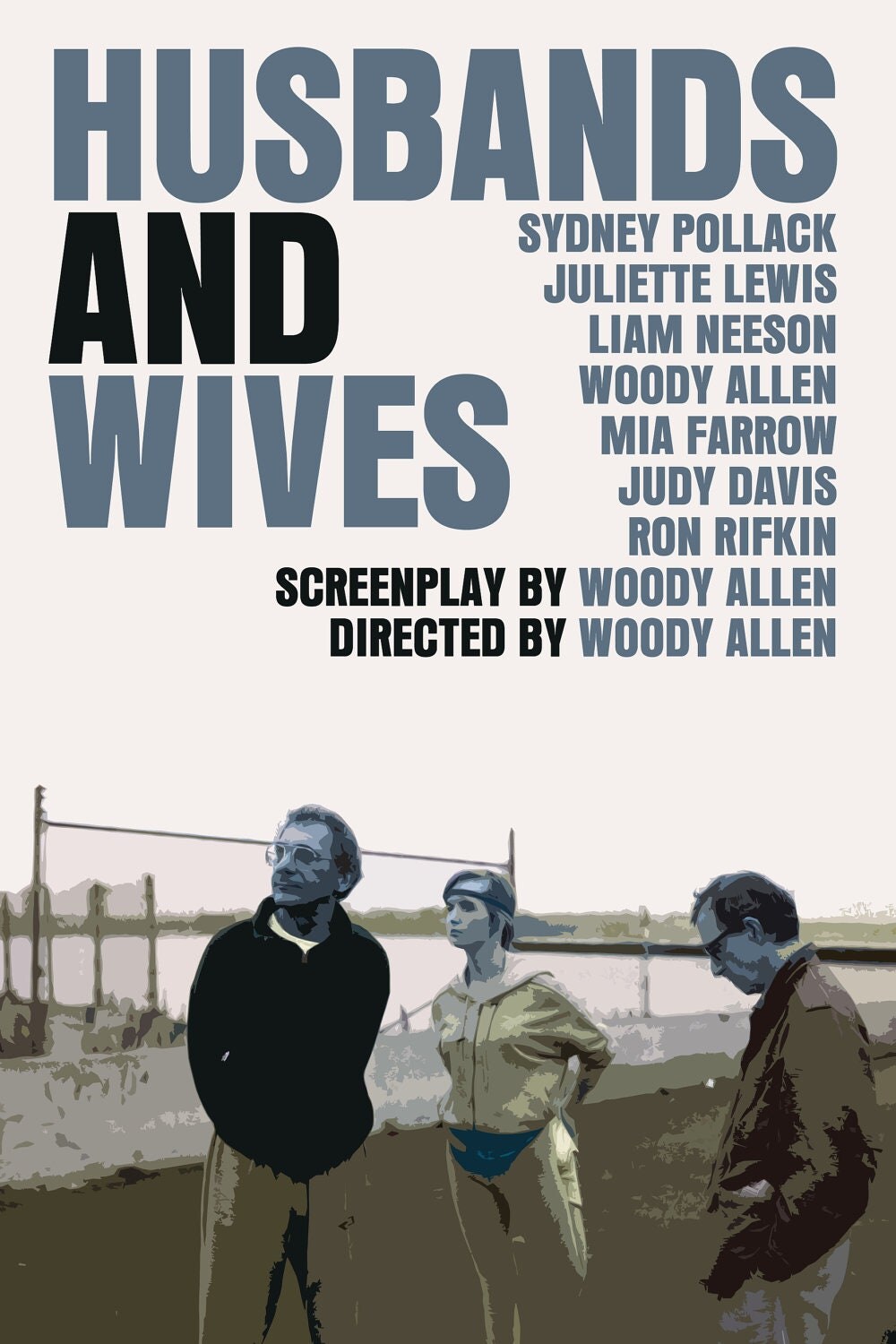
Husbands and Wives. (1992)  Woody Allen

I've been falling drastically behind in my blogging attempts at keeping up with the A&F Marriage Nominations, but here are two I've caught over the last couple weeks that completely took me by surprise.

Why surprise? Probably because I don't consider myself the biggest fan of Woody Allen. I've got nothing against him, in fact I've enjoyed quite a few of his films over the years (Midnight in Paris even crept into the #10 spot on last year's Top Ten Films) -- but somewhere in the back of my mind I've labeled Allen-directed films as "romcom," and it's a genre I typically try to avoid, no matter how well-made.

It's a shame actually, because looking over his list of films, at least five have left a positive imprint in the back of my mind. So I guess my enjoyment of the two films here should really be little surprise at all.

Crimes and Misdemeanors, a film which sits at #79 on the A&F Top 100, sets its eye firmly on ethics, as it deals with the ramifications of both adultery and murder. It questions whether certain sins are tiered as higher or lower, whether sin and morality are man-made constructs which keep a peaceful code and hold things together -- ingrained in our psyche to keep humanity from tearing ourselves apart -- or whether these codes of conduct are derived from a larger plan, coming from a God (here represented from Jewish tradition), who has rules for mankind lest we be thrown into the bowels of hell.

The film follows parallel story lines, both intricately weaved into this theme. Allen's character, Cliff, is a documentary filmmaker, compromising his principles by taking a better paying job creating a TV-style documentary on his more successful film-making brother-in-law (played by the ever-exuberant Alan Alda). Cliff would rather be taking a new mistress and working with her on the documentary he had planned, which centers on an aging theologian and Old Testament philosopher who is a little out of touch with the ordinary citizen. It's a safe bet that nothing here is going to work for Cliff -- that he'll be let down in numerous (and lightly comedic) ways before his part in the story comes to an end.

The other story follows Judah (Martin Landau) as an opthamologist in serious trouble. An affair he has had for the previous two years has spun out of control, his mistress threatening to approach his wife with the details. Judah's brother, a man with a sordid past and crimes too many to count, recommends the easiest way to take care of the problem: get rid of this mistress, quickly, and permanently. Later, Judah has some guests over at the house when he receives a phone call from his brother. The deed is done. We watch as his betraying heart grapples with the guilt. We watch as he grieves, but gets away with it.

Two ghostly scenes I will always remember from Crimes and Misdemeanors. Both come out of nowhere, and both feel like visits from Jacob Marley to a quivering Ebeneezer Scrooge. Landau's Judah has a dreamy drop-in visit from his rabbi, who is also a patient and friend. The dreamy conversation they have describes the implications of Judah's potential crime, drawn up so tightly as to invade the very light in the room. Later, on a simple spontaneous visit to the house he grew up in, Judah ends up in conversation with his entire extended family (around a long rectangular table in an imagined dinner together) on fixed Universal morality, with the suggestion that whether there's a God or not, murder will "out" itself.

The film ends at a cocktail party where the two finally meet. Judah gives Cliff an idea for a film, and begins to talk, in detail, about the events of his crime as it has played out. The two sit and sip liquor: the one that seemingly gets away with everything, and the more innocent one who will be the loser no matter what the future holds. It is a strange combination, these two and this conversation, perfectly placed at the story's end as a climactic dialogue of sorts. How fitting that a conversation, the stuff where Allen excels, would make for a perfectly climactic ending to a movie based less on plot and more on underlying motivations.

This is a witty film, full of interesting questions about sin and the possibility that there might not even be such a thing if there is no higher power. It reads like a story, in fact that is what it is -- but it feels like a paper, a treatise of sorts, or an essay for a college philosophy class. The fact that it's still so entertaining while weighing all these heavy thoughts speaks to the level of talent in Allen's writing.

Husbands and Wives is a little different in the way it formally presents itself. The story is told in present tense, and begins with a couples get-together in which Jack and Sally (Sydney Pollack and Judy Davis) meet at the apartment of Gabe and Judy (Allen and Mia Farrow, acting at this point in their last year of marriage), ready to go to dinner as the four sometimes do -- but on this night Jack and Sally begin with a casual announcement of their separation, the shocking news of which crushes Judy. The couples proceed with their dinner plans, trying to make the best of their night, but the film takes us by surprise when it suddenly cuts to Judy, breaking the fourth wall in a documentary interview, trying to piece together why she was so upset.

From here, we never really know what we're watching. Is it a story, or a documentary, or a documentary crew following the characters in present tense reality? The answer to this question turns out to be, "Yes."

This isn't the only thing that threw me for a bit of a loop in watching Husbands and Wives: the nature of the handheld camera work, the hard edits which establish shifts in emotional response, the zoom of the lens itself which functions in much the same way, and back and forth weaving between straight narrative and documentary interruption are all a bit "edgy," in my opinion, for the time the film was made. Created in 1992, it feels like it must have been a bit ahead of the curve when it came out. This is smart story telling, not happy with taking its characters simply from Point A to Point B, but throwing in a few indentations and formal (artsy) ticks along the way.

The dialogue, again, is top notch. Like the presentation itself, and the indentations I've noted, Woody Allen dialogue is never used as a plot device to simply propel characters in a narrative arc; rather, the way these characters speak to each other springs from the kinds of real conversations people in this setting might actually have. The tempo is lively (one has to sometimes wonder whether anyone is allowed to take time to think before they speak), but there is always something deeper going on than a simple convo that leads to another scene.

Like Crimes and Misdemeanors, Husbands and Wives will also end ironically with the director being the most unfulfilled of the whole cast. One has to wonder if this was a period in Allen's life when in two films he comedically expressed some inner turmoil.

Both films are worth seeking out, and will be getting very high rankings in the vote I'll be taking part in this weekend. As far as films for the marriage category, they'll both be getting a solid 4/5 from me. I've been happy to be introduced to these older gems, and I'd love to seek out other older films from Woody Allen.

Wednesday, January 2, 2013

The Squid and the Whale. (2005) Noah Baumbach

Slight Flip, No Flop for A&F Nominations.

Ooooh. This FILMSWEEP reaction is gonna be a fun one.

On November 19, 2009, on my favorite film forum I wrote:

I flip flop about this stuff all the time. Been doing it for years. 

The comment was in reference either to certain films that I couldn't stomach, films which I have loathed for one reason or another over the years -- which have now, for whatever reason, grown on me -- or for certain films which at one point I truly loved, which I've now decided, eeeh, that wudn't so great after all. (Duh!)

Here's where it gets sorta fun:

On the same thread, a thread with the title, "Worst Films of the Decade," about a month and exactly twelve posts later I went completely bonkers in regard to my hatred for The Squid and the Whale and anyone who finds value in the film. (My years of friendship with the peeps and crits there have made me a little more casual than I am here on the blog. Come to think of it, just reading the following has already made this particular FILMSWEEP entry a bit more casual. But... Whatevs.)

In that post, I wrote:

The Squid and the Whale is my pick for worst film of the decade according to the standards set here. I hate it with all my being. I hate it like I hate rapini. I hate it like I hate a fraud, which is really what this thing is. And I hate that many of you love it. You people are all screwed up for loving this stench-infested garbage. It is a horrible, horrid, awful film that on the one hand pretends it has something meaningful to say about kids of divorced parents being screwed up, and on the other hand has such farcical ideas as both the dad sleeping with he-and-his-son's roommate, and an almost-pubescent kid who wipes his semen all over public places and drinks beer and hard liquor and not a parent seems to care. Pick one or the other, not all three. I hate the characters, too. There are many reasons to hate this film, but the greatest reason to hate it is that so many of you seem to champion it as an apologetic against divorce -- and a comedic one at that. There's nothing funny in The Squid and the Whale. I loathe every character and every action. I loathe the writing and its cutsie pie "I can get away with this sick sh*t and pretend that is has a point." But there is no point. Oh gee, I guess that final "artsy" shot of the squid and the whale was supposed to make me think. Like I can't think for myself. What a load of crap. And again, gee, let's all talk about it in some pseudo-intellectual coffee house and pretend we're all in the in-crowd, an act that makes us happier when we sleep at night

UGH! :-(*)

I have to admit that in going back and reading what I wrote, I really did make myself laugh. I am a lucky man to be able to rant at the forum sometimes, and still find a friend or two there.

Here's the thing:

In the past few years, I have changed. I have been through divorce, found a path to recovery from alcoholism, dropped a faith, picked up a hope, lost many friends, gained a few new friends and lost some of those too, gained some of the new lost friends back again and hoped for my kids to not have to go through any of the crazy life experiences I've had to deal with.

I have learned that no matter how dark things seem at the moment, you've just gotta hold on for a little bit, and if nothing good comes your way -- go out and make something good for someone else. (It helps a lot more than you might think.)

And I just watched The Squid and the Whale again.

I can honestly flip just a wee bit on this miserable film, because now that I look at it again, I really think it wants me to hate it. I think that's the reason for its very existence. I can't see it any other way. This is a self-involved film about self-involved characters who are constantly irritating each other and (as in the very first scene, a match of a family game of tennis) competing to be the smarter, competing to be the better. The parents here are arrogant (dad in particular an arrogant has-been), and they raise their children to model their ugly displays of unworthy conceit.

Note: I am no longer saying this is not a well-made film. I concede on that end. As a film, it is well-made. I just can't understand its need for creation in the first place. (And yes, I'm looking directly at you, Baumbach, because a few years back I said the same exact thing about another one of your films -- Greenberg.)

I am open to tracking down or being shown interviews of writer/director Baumbach to find out why he creates any of these films or people, these monster movies of the inhuman condition. I love a good horror movie, but -- "Oh, the humanity." Even in a horror film you've got to care about the person first in order to care that (s)he's in danger of being slashed or gutted or whatever! The characters in The Squid and the Whale lack redeeming value, like a family member at Christmas that you just wish wouldn't show up anymore. You can't see anything good in them -- in fact, there might not be anything good there at all.

Seriously, Baumbach? Is that how you see people? Hate to meet you some day at a cocktail party.

In some ways, The Squid and the Whale reminds me of two well-made films from this year that I rather despise as well: Margaret (poor Anna Paquin, who finds herself in both Margaret and The Squid and the Whale -- I swear I have nothing against her personally), and Take This Waltz, which I wrote in detail about Here. These are all films which drag us through the most torturous parts of life, crawling in the muck of our own meanness, showcasing the ease with which we can lash out rather than change -- with the simplicity of a good cry or a moment of profound clarity at the end trying to justify the bile we've just recognized in ourselves.

Look. I like a nice depressing movie sometimes. Check out my profile, there are plenty of them there. But for a depressing film to strike any kind of a chord in me, it needs to offer more than just depression and a good cry as its goal (or a quiet moment of clarity as in The Squid and the Whale). Such a film is no better than the many times in my evangelical upbringing where I got up from a good cry at the altar, only to realize later that the whole thing had been manipulated by music and a "righteous" man on a power trip.

Where is the artistry here? What point does any of this have? Is Baumbach pointing to something in his own life, and if so, how has he not already jumped off a bridge?

I do not connect well with films that only scream about how dreary life is, how good we are at fucking it up.  They leave us empty, we walk out of the experience quite soulless. We've been offered no hope, no brighter future to hang our hat on, no ending to the terminal sadness, no resolution to the inner chaos we can't control.

I will admit today that this film is well made. And if the goal is to hate it, it accomplishes its goal quite well. But I do not understand the desire to paint this picture, and I say that as one who has been through the ringer myself.

Are there people out there who really want to hold onto the darkness forever?

I once went to a party, and I drank too much booze, and I threw up a pile of well-made vomit.

Well made? Sure, why not.

I guess that's a flip for this flop.

Tuesday, January 1, 2013

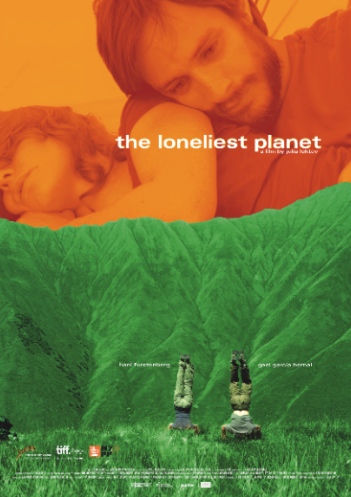
The Loneliest Planet. (2012) Julia Loktev

She Walks Alone With Me for A&F Nominations.

One decision in one split second can change everything.

But sometimes the decision comes from raw instinct and not even from the heart or head. It's not decisive, necessarily, but any movement made will be the decision. That movement is the impulse for survival, the act of protecting one's self -- a motion to protect self when confronted with something fearful.

Sometimes in the instinctual act to save yourself, you end up hurting someone else in the process. 

And sometimes, two people who have been through trauma together want to heal, move forward, and walk down a road together as companions -- but all they can do is walk together in loneliness. The healing takes time (and even effort, from both); deadened desire must first be re-birthed in the heart.

The Loneliest Planet is a film about two such people, Alex and Nica, engaged to be married and backpacking around a terrain somewhere in Eastern Europe. It's about the way their response to events changes the very nature of their relationship -- how they relate to each other, how they respond to each other, and later, how they don't relate, how they don't respond. 

It's also about the choices we make later on. The silly things we allow when we've already been through the hardest part. The final fifteen minutes of this film are the hardest to watch, as we see Nica, reemerging from the trauma she's been through with her beloved and reaching out to another to regain composure. You might think to yourself, "Get it together, Nica. Alex loves you." But no one can understand the path of a heart that's been through such trauma -- and disappointment. 

This is a very slow film that rather plods along for close to an hour, and you might wish that something would simply happen. And then it does. It happens. And it changes everything about how you're watching the film. You begin to see these characters very differently, and you hope for them in a very different way. And then suddenly, the story comes to an end, and you find yourself wanting to back up and watch again.

This is a beautiful film about beautiful people who relate, and then want to relate, but cannot.

Monday, December 31, 2012

La femme infidèle. (1969) Claude Chabrol


Reconciling Infidelity for A&F Nominations.

"I love you," says the disconsolate husband, softly.

"I love you," whispers the unfaithful wife. She is clearly telling him the truth.

"I love you like mad," he utters, again under his breath, holding to his marital bond like an armistice.

If La femme infidèle is about the love between a husband and wife, it's also about the mad bonds that tie them together, and the lengths the two might go to preserve them.

The title says it all, for this is really a story about three people (four, if you count their little boy, and with the uneasy ramifications that will play out here, the fate of the little boy is certainly worth consideration). This is a love triangle tale. It is as messed up as Anthony and Cleopatra -- an ages-old theme, to be certain -- but it is relayed to the eye through the sheer power of autuer cinema, Chabrol and cinematographer Jean Rabier formally giving new light to a timeless idea.

The husband, Charles (Michel Bouquet), suspects his wife, Helene (the beautiful Stéphane Audran) of spending her time in other places in the city, instead of getting her nails done or going every other day to the cinema. He hires a detective and uncovers her lover's name. Husband then proceeds to meet this fellow, and at this half way point all the characters' lives unravel while the cinematic way in which it is told springs the story to life.

The camera movement is phenomenal, at one point swooping from inside a parked car, following the husband around the corner and back into the car in one take -- in other moments slightly inebriated, reflecting the sudden wooziness in a central character's state, or with masterful tracking as we follow Charles dragging something as large as a human, wrapped in cloth, down a Parisian sidewalk. The quiet, felt tension relayed by Bouquet as the husband is actually mirrored in the movement of the lens.

Rabier's craftmanship showcases, quite clearly, a very different and unique time in cinema history -- scenes steal the show on their own, like glimpes of the inside of the Bates Hotel in Psycho, or the people in the other apartment in Rear Window. Yes, it's Hitchcock that foremost comes to mind, where the psychology of the characters is also relayed in the way we're allowed to see it. In the very movement of the camera itself -- a sense of disorientation likewise later in the wife -- we not only see, but feel, the loss of her freedom, her desire, and her need for understanding reflected in tilts, pans, zooms, and perfectly paced edits.

Chabrol even has a sense of humor, like the signature of Hitch appearing in his own film. Only here, in a nerve-wrangling scene in which husband is driving very fast down an all-too-crowded boulevard, we faintly catch a theater in the background as it passes by. What was playing in the cinema in France that day? Les Biches, Chabrol's film from 1968.

This is an amazing, masterful film in which all of the pieces come together: a fine script, decent deadpan (read: French) acting, highly artistic and expressionist cinematography, and edits that know when to cut and when to refrain and let us see more.

After watching La femme infidèle, I find myself wondering: Claude Chabrol, where have you been all my life?

Thursday, December 20, 2012

Take This Waltz. (2012) Sarah Polley


"New things get old," a naked elderly woman says to three younger naked women taking a shower in a public locker room.

(cut)

A drunk, who, seconds after crashing her car in the driveway, is lecturing her sister-in-law for abandoning her marriage: "Life has a gap in it... You don't go crazy trying to fill it like some lunatic."

(cut)

These two statements are the core themes of Take This Waltz, a film which has a few truths mixed in a bucketful of suggestions which, might also be true, and show us a way not to live -- but it's a miserable spectacle to see.

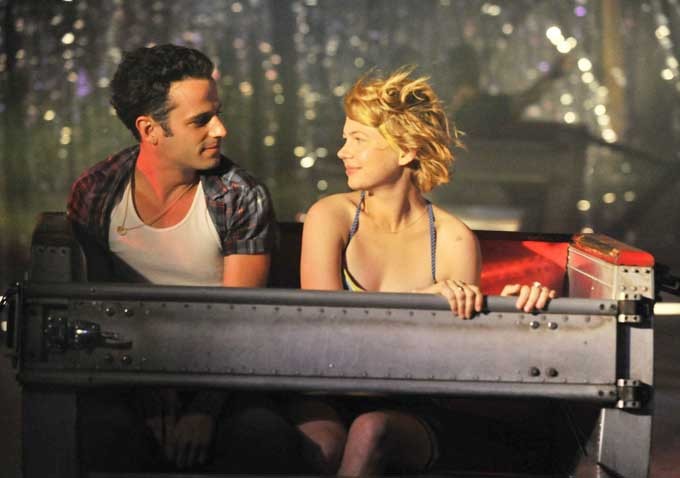
Michelle Williams and Seth Rogen star as Margot and Lou, at the five-year mark in their marriage. They're a couple who care for each other, and probably still love one another, but have lost the spark and can't figure out how to reignite it.

They've lost their ability to engage (they know each other too well to converse in a restaurant), they horribly fail at spontaneity (she cries after several attempts at seducing him in the kitchen), and they've grown too comfortable with each other's presence, losing the joy and sense of fondness they once shared. It seems Margot is looking for the spark a trifle more than Lou -- whereas he is happy in the stability of his home and marriage, she wants every day to be fairies and fireworks.

Enter Daniel (Luke Kirby), the new neighbor from across the street. He's a mysterious loner, a good-looking solo artist who doesn't show any of his melodramatic paintings. He is sly, and fit, and runs rickshaw around Toronto. He's broke but wears the persona of a "Fifty Shades of Gray."

At first he runs into Margot by chance, but as the film moves toward the inevitable they are constantly seeking ways to run off and hang out. They do coffee, they take walks, they condescend and harass one another to no end. There's something going on here, and Margot begins to feel a bit unnerved.

Daniel would be the "new," Lou would be the "old," -- Daniel might be the "fill," Lou might be the "gap".

A truth, hard as it will be, is at least found in Take This Waltz. Margot won't find happiness by running off with someone else. She'd be leaving not only her husband (and a good man), but a supporter with common bonds and a shared history -- and in doing so she'd be leaving many of their mutual friends as well. Her choice, should she go there, will hurt her, leaving her even more unsatisfied than before -- a fact of life depicted quite well in the miserable Take This Waltz -- depicted so well, I never want to see the damn thing again.

The truth often hurts. And these situations hurt. And all kinds of hurtful (read: truthful) questions still rise, questions which anyone who wants to grow might be prone to ask: Can any ONE person really complete ANOTHER? Is that "gap" able to be filled by another person, or is it made to be filled by something larger? (Can an individual fit into the God-shaped hole?)

"You complete me," was the dialogue-turned-pop-expression by Tom Cruise in Jerry Maguire. But -- really? Is it even fair to hoist this kind of burden on another individual?

Like the suggestion in the phrase, "You complete me," all of the characters in Take This Waltz, but Margot in particular, come across as half a person looking to add another half a person to make some kind of Whole in the end. As if a fractured, unhealed individual might be able to add another partial person to their lives, and that together they might make a complete unit.

But in relationships, this doesn't work. If you don't take the time to work on your own self first, you are not going to be completed by the love of someone else -- nor the emotional strength, sex, or help of someone else (although it may work for a time).

I've always thought of this in terms of math. Whereas many would like to use addition, making a 1/2 plus a 1/2 equal one whole unit, I've thought that perhaps we need to look at it as multiplication. One whole times one whole equals, yes, one whole relationship.

All the truth that's found here seems like it might make for a masterful film. So many times these days we see depictions of people who seem to do the wrong thing and live happily ever after. So it's to be lauded that a director like Polley finds a way to make us squirm in our seats, to see the devastation of moral failure so clearly.

However, a suggestion at the end of Take This Waltz leaves a very bitter taste in my mouth (though it may still ring true). The suggestion is that all of these characters are lonely, miserable, untrusting, feeling used, probably slightly bitter and most definitely hanging on to some kind of resentment. That no matter who they end up with they will always want something more, and no matter who they are fucking they'll only wind up feeling fucked.

It's bitter, but it's true -- if you're planning to live your life the way these characters do.

This is a film full of truths, and suggestions that I hate, and lives that take paths that are inwardly destructive and no fun. When and if some of these characters choose to have kids, their kids will have terrible examples and will wind up on the same meds as their divorced parents.

That the film shows truth-in-action is a noble pursuit. That the film shows broken people who find wrong ways to "heal," and that the ramifications of their poor choices are clearly seen is a rare thing in a story these days.

But is it fun to watch? No. I doubt I'll ever watch this wretched thing again.

Wednesday, December 19, 2012

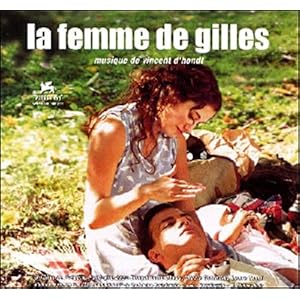
Gilles' Wife. (2004) Frédéric Fonteyne

Heaven turned to Hell for A&F Nominations.

Like Breaking the Waves (but with no God or grace or dialogue to offer help), Gilles' Wife can be a tough film to watch. 

It compares a married couple and the lengths they will go to in opposite extremist ways of life: the disgraceful husband who chases and cheats and emotionally browbeats his wife with the details, and the faithful and saintly wife who loves him so much she selflessly helps him in his affair.

These two, fixed in their positions, are a horrible mix for a marriage. In fact, they are a horrible mix for any relationship -- two extremists who can't meet in the middle.

This is a miserable art film, the kind that people rail against, the kind that people complain about when they complain about a certain kind of French film. The characters are punished (and even punish themselves) for their own inability to properly deal with life on life's terms, and they deserve all the punishment they end up with.

That they got what they deserved doesn't make it any less miserable to watch.

I pretty much hated this movie.

Sunday, December 16, 2012

Sunrise. (1927) F.W. Murnau

A Silent era masterpiece for A&F Nominations.

There is little doubt that Sunrise is one of the greatest films of all-time. In 1929, the first year of the Academy Awards, Murnau's silent drama was awarded for "Unique and Artistic Production," the only time that award has been granted, regardless of the film itself being a box office failure. The National Film Registry of the US Library of Congress has chosen the film for preservation, and both the American and British Film Institutes have placed it on lists that recognize the greatest films in the history of cinema.

A few years back, it was a hard one to track down. I remember purchasing a DVD copy on eBay, for around $30 in 2003, and sending it on tour to my cinephilic friends so they could enjoy it, too. Now, in the age of Instant Viewing and more readily available classics, film geeks find it available through Netflix.

Its plot, based on the story 'The Excursion to Tilsit' by Hermann Sudermann, is simple enough, even generic in its summary: The Man (George O'Brien) has an adulterous affair with a Woman From the City (Margaret Livingston), who convinces him to drown The Wife (Janet Gaynor), sell their farmhouse property, and move to the city to be with her. At the mention of drowning his bride, The Man nearly strangles The Woman at first, but even as he strangles her, his lust regains control -- he falls into her embrace and is soon enough agreeing with her proposition.

Somewhere inside The Man is a decent, faithful husband, who is now struggling between two emotional extremes. Sunrise is surely a film about an abundance of issues, an adulterous affair being its first target, but it is also about a man coming to senses with himself, coming to terms with his own inherent goodness. It is about recognizing your own faults, your own sin, and reconciling with yourself, and hoping to find good standing with the ones you have betrayed and let down.

This was Murnau's first film in America. He was brought to the states in 1926 by William Fox of the Fox Film Corporation in Hollywood. He was widely known before Sunrise as one of the key directors in German Expressionism, with films like Nosferatu and The Last Laugh catching global attention.

Expressionism is well-known for embracing the fantastic, and somewhat a rejection of realism. Think of the cinematography, outrageous acting and over-the-top nature of something like Edward Scissorhands, which is a direct allusion to these German films. But what is fascinating about a film like Sunrise is that while there is melodrama in the acting, and while it's undoubtedly expressionist in its lighting, set design and roving cinematography, even 85 years later the story comes across as a quite realistic, real enough to transcend space and time while being seen.

I think the reason for this is because of the nature of the relationships between The Man, The Wife, and the Woman From the City. This is the never ending stuff of life, these inner impulses and struggles of the heart which will always be present, no matter when a story is told. And what's interesting about a film like Sunrise is that it hails back to an earlier time in cinematic history, sure -- but through the sheer power of its camera's presence from that time we find comfort and mourning in the same elemental struggles.

We are human. We desire to love. We desire to be loved back. We screw it up along the way, and we don't always know how to love right. Even after we screw up, the desire for love remains inside us. And that is a desire that is timeless.

Sunrise is surely a technological achievement, a modern-era wonder, quite recognized as a superior product from silent cinema. But it remains on best-of lists even decades after sound and color because of the heartbeat and the values at its core. There is a pulse that continues to linger, no matter the era in which it is seen, for it is alive, fully human, with a heart made of flesh and not stone.

Tuesday, December 11, 2012

Another Year. (2010) Mike Leigh


Due to the alcoholic subtext of Another Year, as I'd read in various reviews about its characters who deal with addictive tendencies (a subject I'm prone to take obsessive interest in), I've wanted to see it since it hit theaters last year. However, I've also been a little fearful of the film because I'm no fan of Mike Leigh, the UK writer/director who never seems to realize the outrageous potential of cinema, and maybe should have worked his sullen dramas in theater instead.*

I'm not saying Leigh's films are boring... Well, OK, to be honest, I guess I am.

I do enjoy films in which character study is the most important aspect, but for some reason Leigh's other well-known films --  Secrets and Lies, All or Nothing and Vera Drake -- are the kinds where you view them and you might remember them in a week, but certainly not in a month. Case in point: I remember talking about Vera Drake with quite a few people way back when, but I have no memory of anything we discussed outside its controversial subject matter, and frankly, it wasn't strong enough to care to go back for another look.

So there is is. I find Mike Leigh films a bit of a bore. I've admitted my bias up front, and I'm willing to be taken to task for my failure. (There are circles, in Britain, where the guy is held up as a god with a small "g".)

I finally sat with Another Year when my friends at A&F began the nominating process for a list that will eventually become the Top 25 Films About Marriage, or whatever we finally call it. I am voting in that poll and want to give the many nominations their fair shake -- meaning, I want to see as many nominees as I can and follow in the discussions about why a particular film might qualify as a top film on the complexities of marriage. And I can see a decent case being made for Another Year. It is definitely a film which would suit that list quite well. The problem I'm having with it is more of the "boring" and less of the "well suited."

The film might be as boring as some of the marriages I've seen, but I found something interesting when engaging its reviews, one thing that might make Leigh a genius and prove that I honestly don't know what I'm even talking about. To get to that, let me first explain the foundation of Another Year's plot:

The story follows a happily married couple in North London, Tom and Gerri, and a year in their family and friends' lives. The year is divided into four seasons, beginning with Spring and ending in Winter. The couple is aging, but both are still working -- Gerri as a therapist, a counselor of some sort, and Tom as a very professional city engineer, which he shrugs off as being a guy who "digs holes." They are both white collar, educated, with a big house and quite a few rooms and are happy in their various roles in the marriage. They have a son in his late twenties or early thirties, Joe, who hasn't yet found the right girl (and doesn't share much with them about this part of his life), and a few friends who seem to stay over and drink too much at their house from time to time.

One of the friends is Mary, perhaps one of the neediest characters I've seen in a while. She is single, in her early forties, and says she's happy until the drink has finally excited her tongue a bit, and that's when you find out, oh, she's not so happy about being single after all. After she's been drinking a few times at their house you start to look at her a little differently. One might say she's pathetic, but you can also form feelings of sympathy for her loneliness. It's not every single person's fault that they are alone. Mary has made some sad choices over the years, sure. But the choices don't seem wrong enough to alienate her. That's just a part of her life. That's a part of her character's fate. Hence the sympathy.

A few of the characters here are interesting to watch, Mary being the first and foremost. It seems she might fall for any man to dig herself out of her isolation. But that's not quite true. There's another fellow who stays over at Tom and Gerri's place sometimes too -- Ken -- an overweight and aging smoker and drinker, another divorcee who also drops in at the house, stays over, and cries a little bit when he's drunk, too. Though Mary never sees Ken cry, she treats him with contempt. It's hard to say whether there was some sort of past that hangs between them. Mary, too old for Joe, keeps feasting her eyes on him, and when she runs into Ken, who might be a decent fit, she treats him like the plague.

If you like a character-driven drama and a story that simply watches how folks interact in the real world, Another Year can be worth your while. But for me, Leigh's genius came after the film (which I still admit is a little long winded for my own tastes), when I read about the characters and how different viewers reacted to them. This is where we look at Tom and Gerri a little differently, and begin to see that we don't always have the same perceptions about the people we meet; that our backgrounds and understanding shape our perceptions about people as much as much as their own actions.

Recently, after sitting once again with the beautiful six-hour epic The Best of Youth, I wrote a bit about how two characters can be involved in the same situation and can be moved in opposite life directions, polar extremes from one another -- but we still understand both characters and why they would choose their separate paths, even though they've been through the same ordeal.

The same can be said about alternate viewers' reactions to Another Year. Case in point: My long time A&F friend and WAFCA critic, Christian Hamaker, wrote the following about Tom and Gerri after seeing Another Year:
The married couple around whom the story revolves are wonderful people, imperfect but kind-hearted and generous. People come to them with their worries and fears, with good news and bad. And the couple reaches out to others who are hurting, who are newly widowed. They take care of their family, and their friends.
Christian goes on to say that it is so simple and obvious, and yet amazing.

I had the same sort of interpretation of Tom and Gerri (minus the word "amazing," for I don't know whether he is talking about the couple in the film or the film itself). That basically, Tom and Gerri are nice. That there really are courteous people left in the world, and that the film displays an example of that notion in this couple. Here are two people who have grown together, and from their love, which is really the driving force of the film, they feel compelled to reach out to their friends, except when their friends get in the way of their family (and essentially, that happens in Mary's later reaction to Joe bringing home a real girlfriend).

How interesting, then, to read a few other critics' reactions, and I'll just note here that this is re-printed from the same forum:

Karina Longworth, The Village Voice:Unfolding in four episodes pegged to the seasons, Another Year’s arc covers the widening gulf between Tom and Gerri’s entitled contentment, and the increasingly bleak desperation of their family and friends. Ken and Mary, envious of Tom and Gerri’s bond to one another, seem to regard the couple’s home as a safe space in which to unload—apparently oblivious to the knowing looks that Tom and Gerri exchange right in front of them. The further the characters are etched, the harder it becomes to figure out with whom Leigh intends us to identify: Tom and Gerri’s horrible house guests, who you can’t help but pity for their clueless concern for only themselves? Or self-appointed “Saint Gerri” and her even more self-righteous partner, whose care for friends and family is never anything less than condescending?


Glenn Kenny, MSN Film Reviewer:Tom and Jerri are cheery, comfortable old lefties who've understood that they're not in a position to change the world anymore, and have gotten to be fine with that -- there's a correlation between this picture and Leigh's 1988 "High Hopes," in which a younger (obviously), punkier, leather-jacketed Sheen played one half of far a more agitated couple in Thatcherite Britain. As for Mary, her life is one (largely invented) turmoil after another, and the couple's dealings with her frantic plaints eventually get the viewer to wondering whether these nice, settled folks are really all that nice. Mary is very clearly an alcoholic. But the A-word is never once dropped in the film. And Jerri, who's a therapist herself, never even suggests counseling, or a support group, to Mary until an almost cruel hammer-dropping scene near the film's end. Tom and Jerri are so very polite, so very indulgent, so very correct in all their dealings, all the while dispensing conventional left-liberal wisdom spiked with conventional complacent cynicism whenever contemplating a crisis, be it global or local. But it's clear that all the while, they're stifling their own strong feelings of put-upon-ness and resentment. As much as you like them -- and maybe you won't like them, (that's one of the things about Leigh's films and their characters, they're so unusually and thoroughly textured that they never seem designed to elicit a simple response) -- you have to wonder if they're so besotted by their own comfort and contentment that they can't help but act as passive-aggressive near-monsters to the people they're supposedly close to.

I guess this is one long blog post simply to say that I'm still learning, and that one can learn even from a movie that he considers slightly "boring." I'm learning about the power of perspective, still learning that there is never one absolutely right path. I'm learning that we all see things from our own (mostly wrong) backgrounds and senses of personal taste, but the human nature in every one of us needs to form some kind of an opinion anyway -- if anything, so that we just don't float and get pushed around.

I'm gonna chalk this one up as a film which didn't really bother me, but it didn't really move me, either. But its reviews and criticism gave me a bit to chew on, so it can't be as bad or boring as I originally thought.

And if ever I talk about Mike Leigh again, I'm going to try my best to not give an opinion in a sentence or two. Clearly there is a lot of craft at work here, to be able to evoke such strong, opposite reactions from well-known critics.

Is Leigh a genius? Tough to say. But he wouldn't be the first genius I don't really connect with all that well.


* That is not to discredit theater, although that's not my thing either, but it is foolish to not realize that film has more tools available with which to enchant the viewer.

Wednesday, December 5, 2012

The Best of Youth. (2003) Marco Tullio Giordana

Six Hours of Italian for A&F Nominations.

This is a sprawling, epic journey following the lives of four siblings in Italy over the span of something like forty years. One of my all-time favorite films, it's a story I wish I could live inside. It has brothers I wish I could call my own, and friends, who like in real life, I wish I could figure out.

The story pivots itself around two brothers from the Carati family, Nicola and Matteo, from the time of their early college years into their diverging adult lives. It shows how their paths are forever altered by one event they share early in the story, and how each of them manages to carve out a totally opposite path from the other -- social, political, and otherwise -- and yet they always stay somewhat connected, and neither one of them are wrong in their different directions.

One event from their youth has sent each in opposite directions, and yet we can understand why each has chosen the way he deals with it.*

When Matteo takes on a job at a mental institution in the mid-sixties, he is introduced to the character that changes them: Giorgia, a wreck of a patient, who barely speaks and refuses to let anyone touch her. Matteo begins taking her on walks as a part of his job, walks that sometimes don't turn out well due to Giorgia's belligerent nature. But when he researches into her past he discovers that she is recovering in a greater degree from her treatment rather than whatever originally ailed her. Giorgia has been given electro-shock treatment, an ineffective, incredibly damaging procedure where two electrodes are placed on the patient's temples for shocking the brain.

If you look very closely into Giorgia's eyes, you can see she might have at one time been a beautiful girl. Whatever hurt her before isn't as bad as the treatment that is hurting her now. Matteo instinctively sees this. On an impulse (the first of many for Matteo), he sneaks her out of the institution at night, and shows up with her when meeting Nicola. They were planning a vacation to Norway with some friends, but in an error of innocence, the naive young brothers decide it is time to take Giorgia back to her home to be with her parents.

Perhaps you remember some event from your life that changed you forever, or maybe it altered the course of your thinking. Perhaps you were raised to believe one thing, but experience taught you something else. In taking Giorgia back home, Nicola and Matteo are trying to do the right thing, but they will fail in doing so. And what happens on this trip will haunt them for many years to come, their psyches permanently altered.

Giorgia disappears from their lives, and there is nothing the boys can do. As we follow them over the decades, there are other characters who pop in and out of their lives, too. Quite a few times when someone disappears, the only thing left behind is heartache. Sometimes the heartache feels like it's just too much, and we get to see and understand how each of the family members deals with it. When those we love go MIA, it has deep ramifications on our other choices, too.

Plot lines weave in and out, different characters have different arcs. Time moves forward. Political movements have their moment in the sun. The Best of Youth becomes a tapestry of all the lives in and around the Carati family, what they face over the years with their spouses and their friends. Some go into the government. Some become fiercely anti-government. One, in particular, loses herself to a political uprising.

And then there is love, and destiny, and the idea that sometimes two can make it work even with the same ghost that follows them around.

The expressive nature of this Italian family makes it such an endearing work. This is a film in which Story (capital S) is front and center, and Characters (capital C) can be loved, whether in joy or misery, understanding or mystery. There is a pulse to this six hour film that makes it worth its longer length. It develops so deeply, these people become the kind of family you want in your heart.

Truly, this is an unforgettable and rewarding Story experience.


*Well, maybe. One can understand some of the choices Matteo has made, but one of the most mysterious parts about The Best of Youth is Matteo himself, and the final choice that he makes. This man is another one of the mysterious figures that drives at the heart of the story. We want to understand him. We are compelled, like his family, to somehow get to what  drives him, and yet we are left understanding many of his choices but never understanding his beautiful, emotional heart.

Monday, December 3, 2012

Chrystal. (2004) Ray McKinnon

Southern Gothic for Marriage Nominations.

Raw heartache and traumatized lives are grim reality in this 2004 drama, starring Billy Bob Thornton and the now deceased Lisa Blount. A red dirt scratchwork of southern gothic suspense is the foundation on which the two deliver bold and riveting performances.

Joe (Thornton), involved in a high speed chase by a cop, nervously navigates the back wood Ozark roads with his small boy and wife Chrystal (Blount) at his side. It's hard to know exactly what is his crime (the viewer tends to think there might be quite a few), but this ends in the same sad fashion as many of these types of chases -- Chrystal's neck broken through the windshield, their child gone (presumed dead), and Joe carted off to jail for the next sixteen years.

Over time, Chrystal's mental condition erodes until only a shell of a woman remains. She is promiscuous with teens, can barely string together a sentence, and seems to care very little about moving forward. She always said that Joe was the one with the bad luck, but seeing her so traumatized, unable to find that needed healing, one has to wonder whether the bad luck was actually their bond.

Out of nowhere Joe's out of prison and back home. When she sees him she tells him it's still his place. She hasn't divorced him, there aren't even any papers drawn up, and if he wants her, he can have her, because it's nothing special anymore. She has been broken for so long that if Joe thinks he can find redemption here, he is sadly mistaken. He is a fool.

He finds work as a welder and begins to find a routine, but the past steadily creeps over his shoulder. Years ago he was known for selling the best weed. A local dealer, Snake (in a blitzkrieg performance by director McKinnon) tracks him down and makes a threat: if you intend to sell your stuff, you're selling your stuff through me. Joe has no desire to go back to breaking the law, but he's not going to be thugged around either. Between these two characters follows an incredibly real fist fight, and later one of the goofiest (again: real) shootouts one can fathom.

The film is about trauma, and a need for reconciliation, and it's about heartache and pain and the need for sorrow to just go away. Sometimes with sorrow, it's like: enough is enough. Any way I can get rid of you, even momentarily, sure, I'd be glad to do that. The mystery of their little boy, that child they lost that night in the woods, is a memory that haunts Joe and Chrystal every day. He is gone, and nothing can be done about it, and where he went is a mystery, and yeah Joe -- it's all your fault.

In this hostile, menacing place where only the strong survive and the cops can't be trusted, this feels like Flannery O'Connor, or maybe 2010's Winter's Bone. There are ruthless people to avoid and a harsh wilderness all around -- the ragged setting heaps another layer on Chrystal's misery.

The incredible thing about this mournful little dirge is the symbolic redemption at the end of the misery. It's no happy ending, I'm not sure anyone here will live in happiness again. But a genuine stab at transformation seems to leap like a ghost from the Arkansas woods. And in more than one symbolic gesture we are reminded of why children grip our hearts and touch us so much:

A few quiet scenes of a little girl in the end give us pause at how precious childhood is. When we talk about wishing we were kids again, or think back to a time when things were innocent, we aren't just looking at some kid and hoping for her best, or even watching children's lives hoping they avoid all this pain. We're amazed at the thought of innocence itself, and that to a child, healing can come, and so quickly.

There is something necessary about watching babies and children, about remembering the beauty of inexperience. They remind us of safety, of purity -- of a place we'd like to go back to. They remind us that all is not lost.

Sunday, December 2, 2012

La moustache. (2005) Emmanuel Carrère

Shaving Away at the A&F Nominations.

I first encountered this film three years ago when my ex and I were going through the initial stages of our separation. The film had a profound impact on me, and it has never left my mind. It's a film that could have been a sonnet, might have been a verse from Ecclesiastes, but is anything other than just a story.

When the fine folk at A&F recently began the nominating process for a list that will eventually become our Top 25 films about marriage, this was the only immediate nominee that sprung to my mind out of the thousands I scoured over, from the past ten years of keeping film journals.

I must admit a kind of superiority complex regarding my thoughts about the film, from my recent strolling over at the IMDB message boards. There is nary a thought there in two pages of posting that doesn't want, in some way, to read this film in a literal sense. Whether it's an alternate universe or a dimensional shift, or Alzheimer's or some other form of dementia, people tend to view it as though what they're watching represents reality, albeit a fictionalized form. But if La moustache were a square, it would never really be the square. It would be all of the beautiful space inside and outside the lines of that square.

There is nothing literal about La moustache. It is as figurative as figurative gets. Perhaps a better way to say it is that, like films like Mulholland Dr., or Reconstruction, or Eternal Sunshine of the Spotless Mind, it is as abstract as abstract gets, at least in its forward, plot-like motion. Its plot certainly references and resembles the real world, and how things work in the real world -- but this is stronger than a linear or a literal story. It's easy to fall into the trap of reading a film about a man who shaves his mustache as only a man who shaves his mustache, but to do so somewhat misses the point. A key to fulfillment with La moustache is seeing it as representational in its plot, and more literal in its themes.

So what are its themes? Loss. Isolation. And our need to be connected and stay true to our vows. The idea that love is a superior force, stronger than the problems it faces and willing to reconnect when the world goes haywire.

When Marc, known for years for sporting his signature mustache, asks his wife what she'd think if he were to shave the thing off, her first tepid thought is that she might not even recognize him. She's only known him for sporting this one particular look. For whatever reason, he immediately shaves it anyway, and when he playfully reveals himself to her she doesn't even notice.

That night at a dinner party, his friends don't see a difference, but in his disappointment he doesn't say a thing. At work the next morning Marc is blown away by his office teams' lack of response. No one is noticing this thing which seems so trivial, but the thought of it scratches at the back of Marc's mind. That night he finally blows up at his wife.

The response he gets from here on out is that he never had a mustache and she has no clue what he is talking about, which sends Marc searching old photo albums and pictures, and on a whirlwind mental ride in which slowly, other things begin disappearing from his life. Friends, family members, the house on the street where he grew up all disappear in the unraveling process. Marc slowly begins to understand that a reconstruction of sorts has begun in his life; that his memory is completely different from all evidence of nearest reality. At this notion, Marc fearfully skips town and country, and looks to separate himself from everything he has ever known.

Agnès, Marc's wife, loves him dearly but is obviously concerned. He is obsessing about his mustache, is making up friends he says they've hung out with, and he can't even remember the death of his dad last year. The unraveling process increases in strength and it's never clear whether Marc, or his wife, or the world at large is to blame. We don't know who misremembers what, even though we do know we saw Marc shave in the first few frames. Things that would once be seen as small problems begin to pile up. The issues take a toll on the once strong relationship.

It's at this point that the mind plays a trick on the viewer. Does this couple love each other? Surely they do. Agnès has heaps of love for Marc and what he is going through. Is what is happening here truly a narrative experience? Surely it isn't, at least not in this viewer's way of thinking. What are the small things that add up that lead us to separating ourselves from our most dearly beloved?

Looking at situations like this in day to day living, it might not be so small: He was unfaithful. She spent too much money. He developed an addiction. She had an illicit affair.

But what about the smaller reasons we forget about? What about the fact that he likes to squeeze the tooth paste, and she likes to roll it up? He leaves the toilet seat up and she leaves the toilet seat down? What about the dirty socks he somehow never gets into the hamper? What about the times when she forgets to feed the cat?

Two people can be in love as well as they can be in blame. And as they grow, their memories and perceptions about themselves and their significant other will differ. La moustache is a film with no real ending, other than to show us that these things can be managed if the two are willing to try. Sure, something as tiny as a missing mustache can be the impetus for leaving a marriage and a home behind, but a need to relate can help overcome some of these problems, and our differences. Relating brings healing from isolation.

La moustache is a very French film. It hails back to a tradition of films that do not care whether their structure is sound at all. In fact, structure might be seen as something conveniently tossed aside in favor of pushing the medium's limits. (Think: Last Year at Marienbad.)

There is a lot at work in this very French film, but to read it as any structure outside of its themes (of loss and change and loyalty and dedication), is to miss its focus entirely. Remember: it's the beautiful spaces inside and outside the lines of that structured square.